
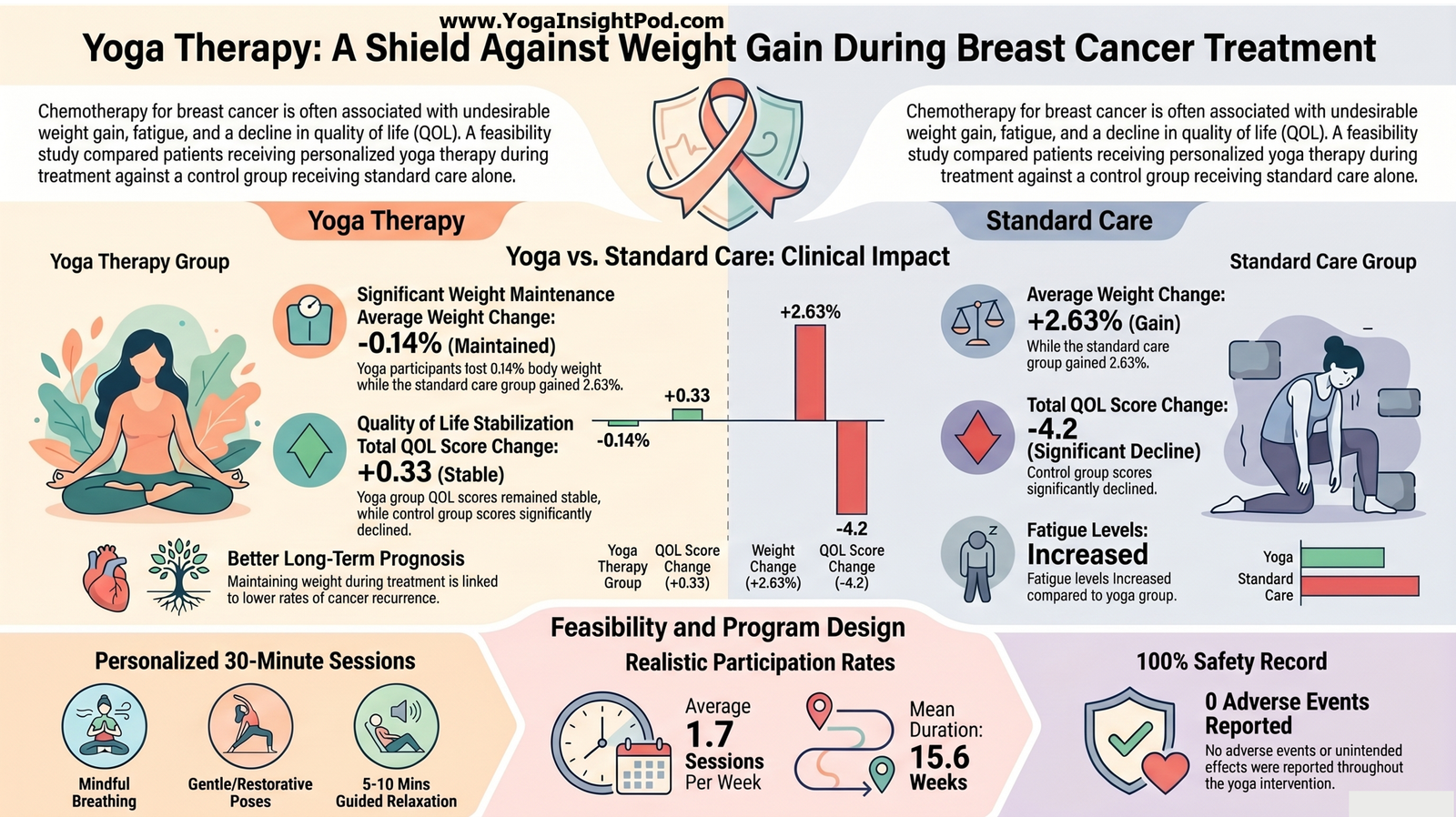
This study explores whether personalized yoga therapy can help women with early-stage and locally advanced breast cancer maintain weight and protect quality of life during chemotherapy. It found promising signs of weight stability, better fatigue control, and no safety concerns.
A new pilot study by Lindsay Peterson and team from Washington University School of Medicine suggests yoga therapy may offer more than relaxation for women going through breast cancer treatment. In a randomized trial of 30 patients with early-stage or locally advanced breast cancer, researchers tested a personalized yoga program delivered during chemotherapy to see whether it was feasible and whether it could reduce treatment-related weight gain.
The yoga plan combined gentle movement, breathing, mindfulness, and relaxation. Participants were asked to practice three times a week, but many completed fewer sessions than planned because of the demands of cancer treatment. Even so, most stayed in the study, and the program caused no adverse events. The most striking finding was weight maintenance. Women in the control group gained an average of 2.63% of body weight during treatment, while the yoga group stayed essentially stable, with an average change of -0.14%. The difference between groups was statistically significant.
Yoga also appeared to help protect day-to-day well-being. Control participants reported more fatigue and lower quality of life, while the yoga group remained steadier over time. Inflammatory markers such as CRP and TNF-alpha did not change significantly, but the study was small and not designed to prove biomarker effects. Overall, the paper suggests that personalized yoga therapy may be a practical supportive care option during chemotherapy. Larger studies are needed, but the results point to yoga as a promising way to support weight management, quality of life, and comfort during breast cancer treatment.