A systematic review by Samuel Arias-Sánchez and team from University of Seville of brain-imaging studies suggests that yoga may influence neural networks involved in stress, attention, memory and emotional regulation. However, the findings also reveal important limitations in the current evidence.
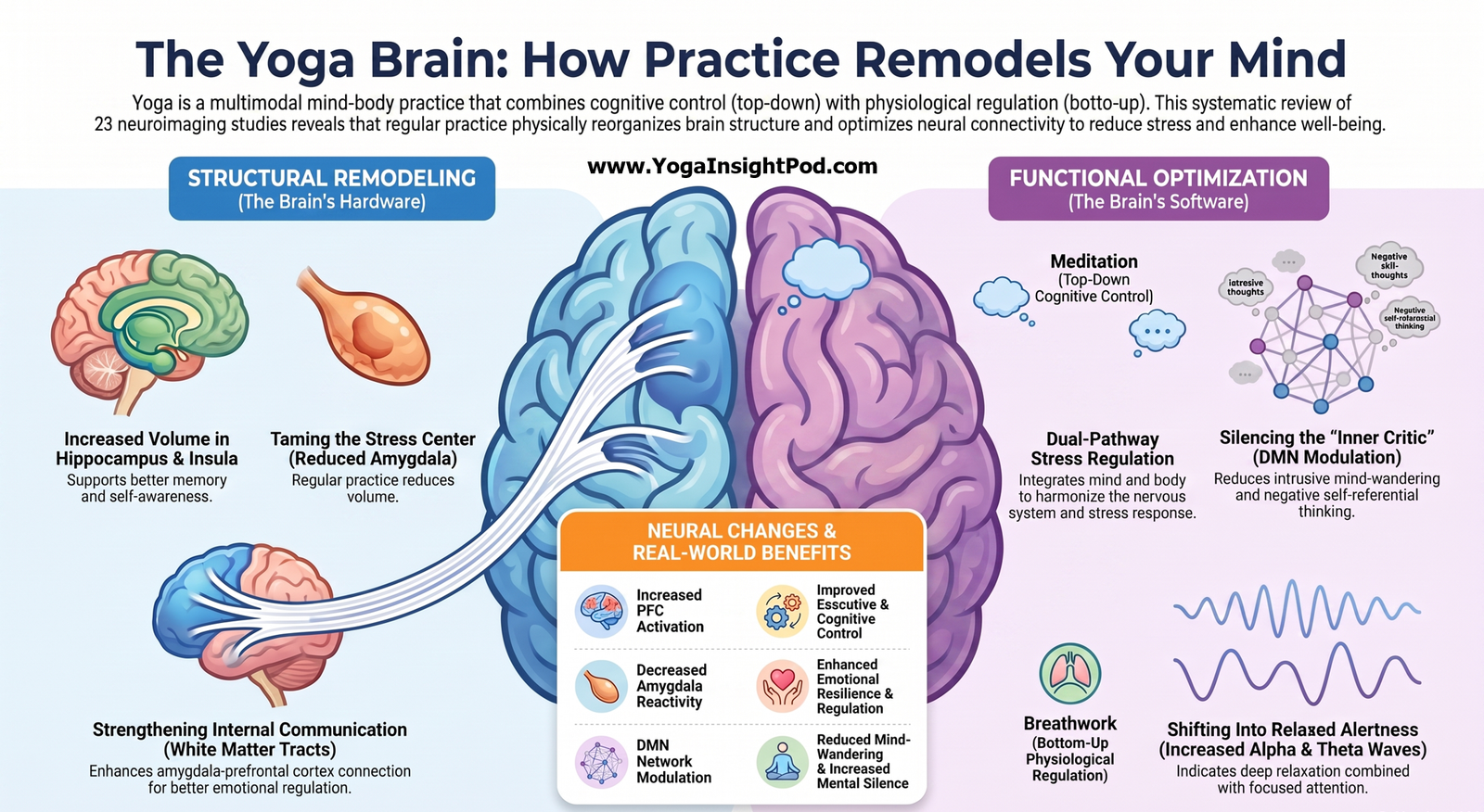
Yoga is often associated with flexibility and relaxation, but could regular practice also change the brain? A 2026 systematic review examined 23 international studies involving healthy participants and brain-measurement techniques such as MRI, functional MRI and EEG. The researchers identified recurring changes in brain regions and networks involved in attention, emotional regulation, memory, body awareness and self-reflection. One of the most frequently reported findings involved the default mode network, a brain system associated with mind-wandering and self-focused thinking. Yoga practice was linked to altered activity and connectivity within this network, potentially supporting greater mental focus and reduced repetitive thinking.
Changes were also observed in the prefrontal cortex, anterior cingulate cortex and insula regions involved in cognitive control, emotional regulation and awareness of internal bodily signals. Some studies reported reduced amygdala reactivity, which may help explain yoga’s association with improved stress and anxiety regulation.
Structural studies found possible differences in the hippocampus, insula and other regions related to memory and self-regulation. EEG research also identified changes in alpha, theta and gamma brainwave activity associated with relaxation, focused awareness and practitioner experience. However, the evidence is not yet definitive. Most studies were non-randomized, samples were often small, and yoga styles differed considerably. Postures, breathing and meditation may each affect the brain differently. The emerging picture is promising: yoga may support neuroplasticity across interconnected brain networks rather than changing one isolated “yoga center” in the brain.