
Research driven conversations that unpack peer reviewed studies and clinical findings to explain how yogic practices influence health, stress regulation, and human biology in everyday life.

A podcast translating yoga research into practical, evidence based insight.
Explore evidence based strategies to manage stress, burnout, change fatigue, focus, and emotional resilience, offering insights relevant to healthier, more productive workplaces.
Examine peer reviewed studies, clinical trials, biomarkers, and mechanistic pathways, translating research on yoga and contemplative practices into thoughtful, scientifically grounded dialogue.
Complex science is made approachable, empowering listeners to understand how yogic practices support mental health, nervous system balance, and overall well being in everyday life.
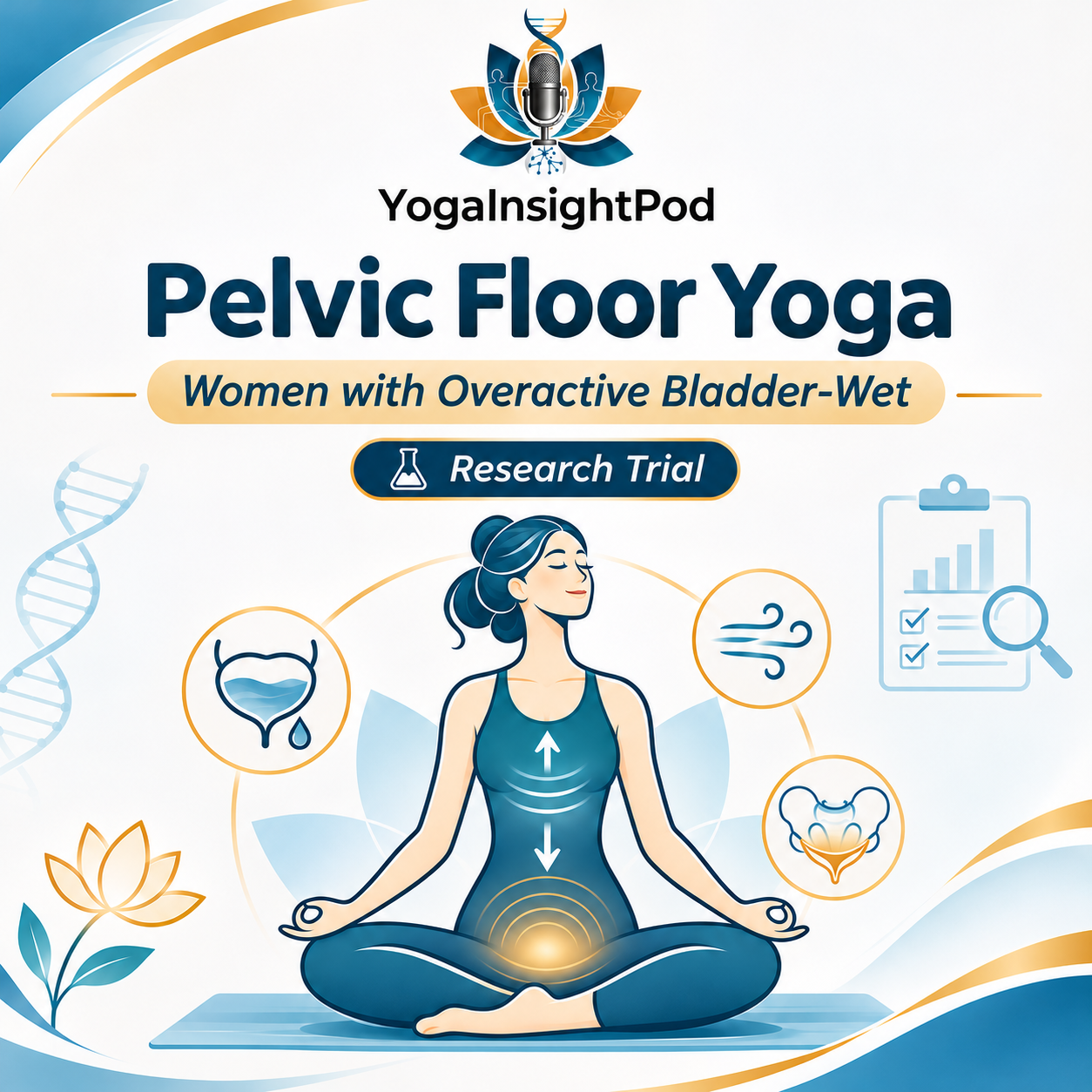
Can pelvic floor yoga help women improve bladder control and reduce urinary discomfort? Discover fin...

Can practicing yoga help university students reduce stress and improve emotional well-being? Discove...
Can mindfulness meditation change how the brain experiences pain? This episode of www.YogaInsightPod...
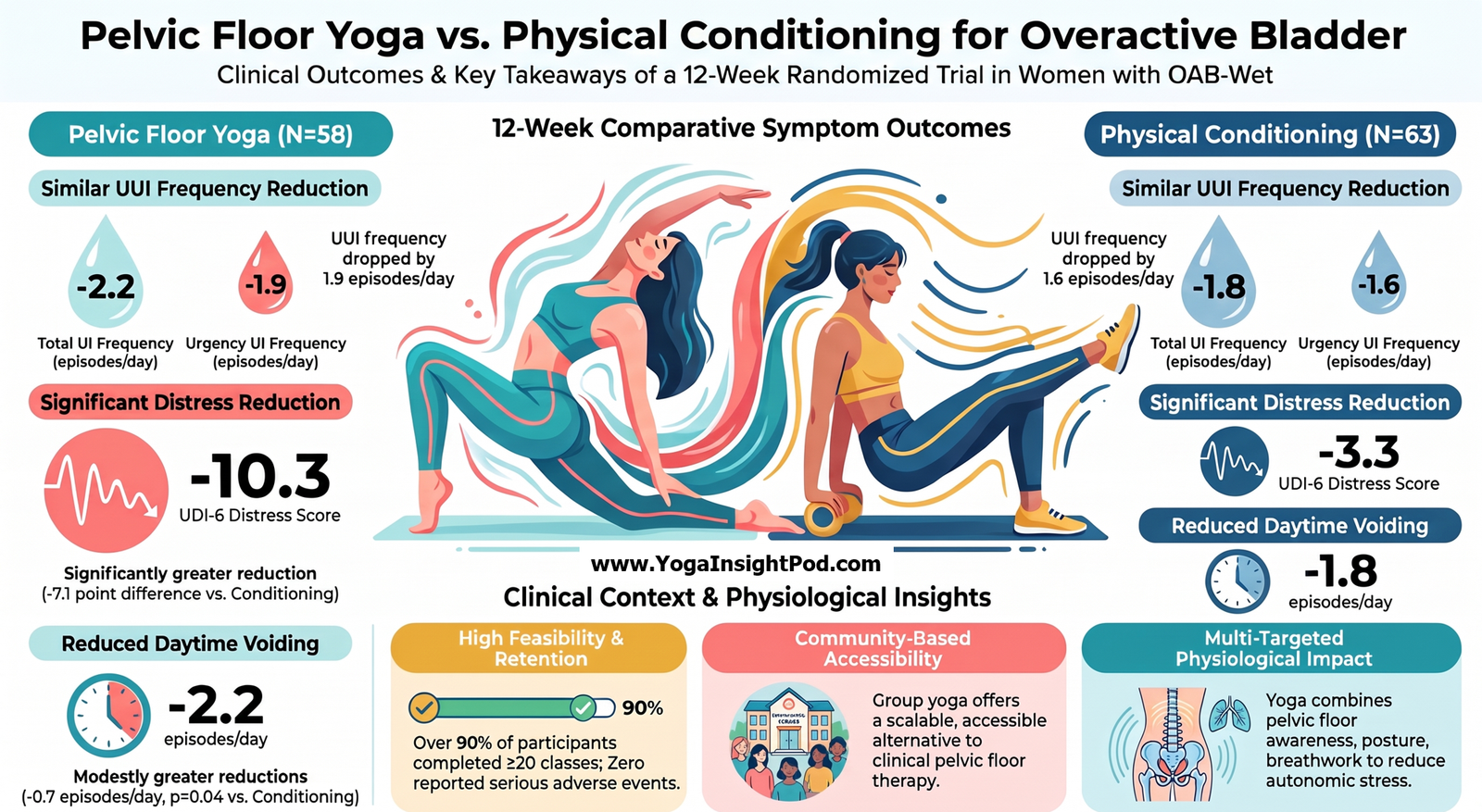
Explore how pelvic floor yoga, Hatha yoga postures, breathing techniques, and relaxation may support bladder control and pelvic floor wellness in women. Discover findings from a 12-week randomized trial involving 140 women, conducted by Alison J. Huang and colleagues from Stanford University and the University of California, San Francisco.
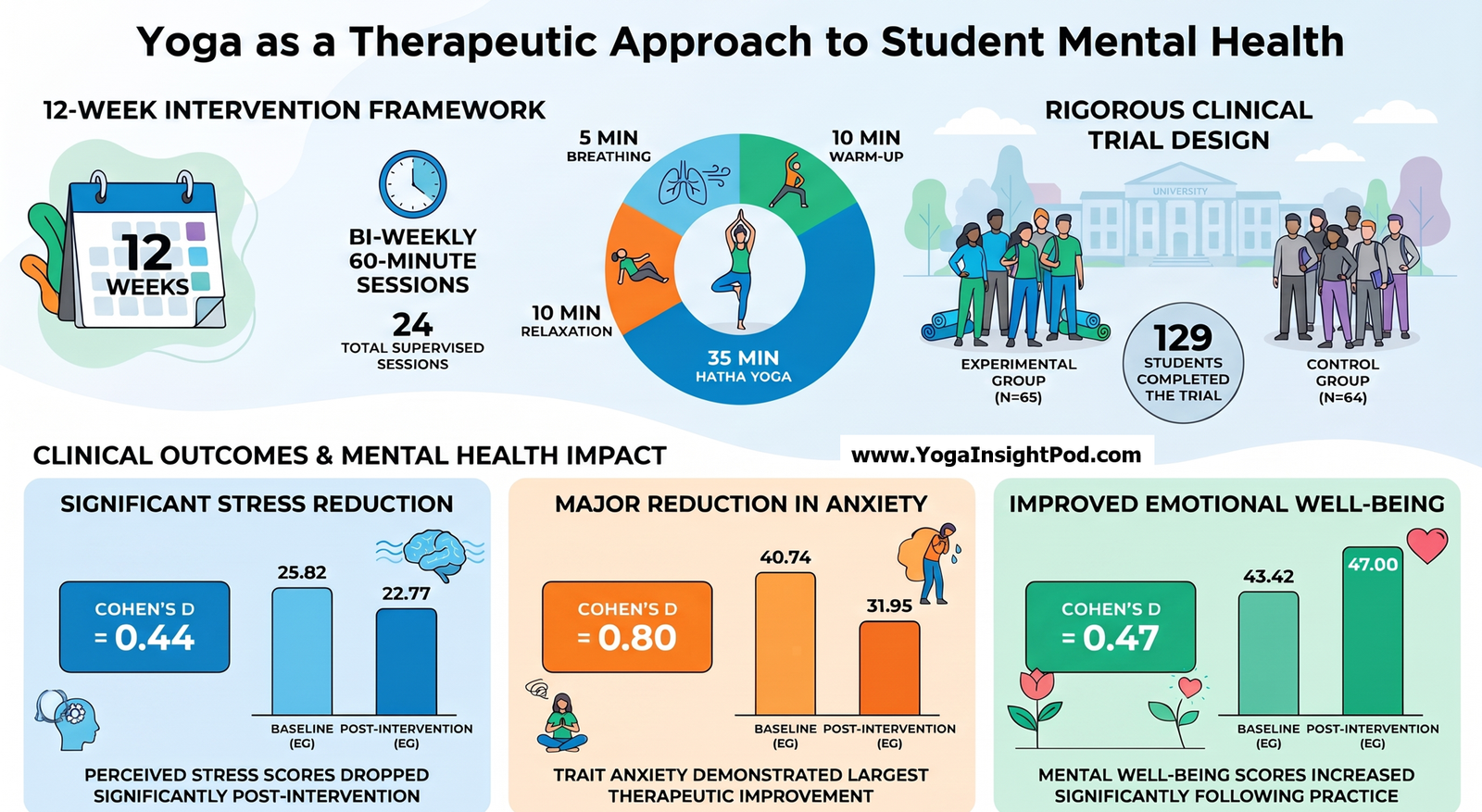
Can regular yoga practice help college students manage stress and improve emotional well-being? Explore findings from a randomized controlled trial by María del Carmen Carcelén-Fraile and colleagues from the University of Jaén, University of Atlántico Medio, University of San Buenaventura-Cali, and Higher Education Center for Teaching and Educational Research, investigating the potential benefits of Hatha yoga, pranayama, and relaxation for stress reduction and emotional well-being among university students.
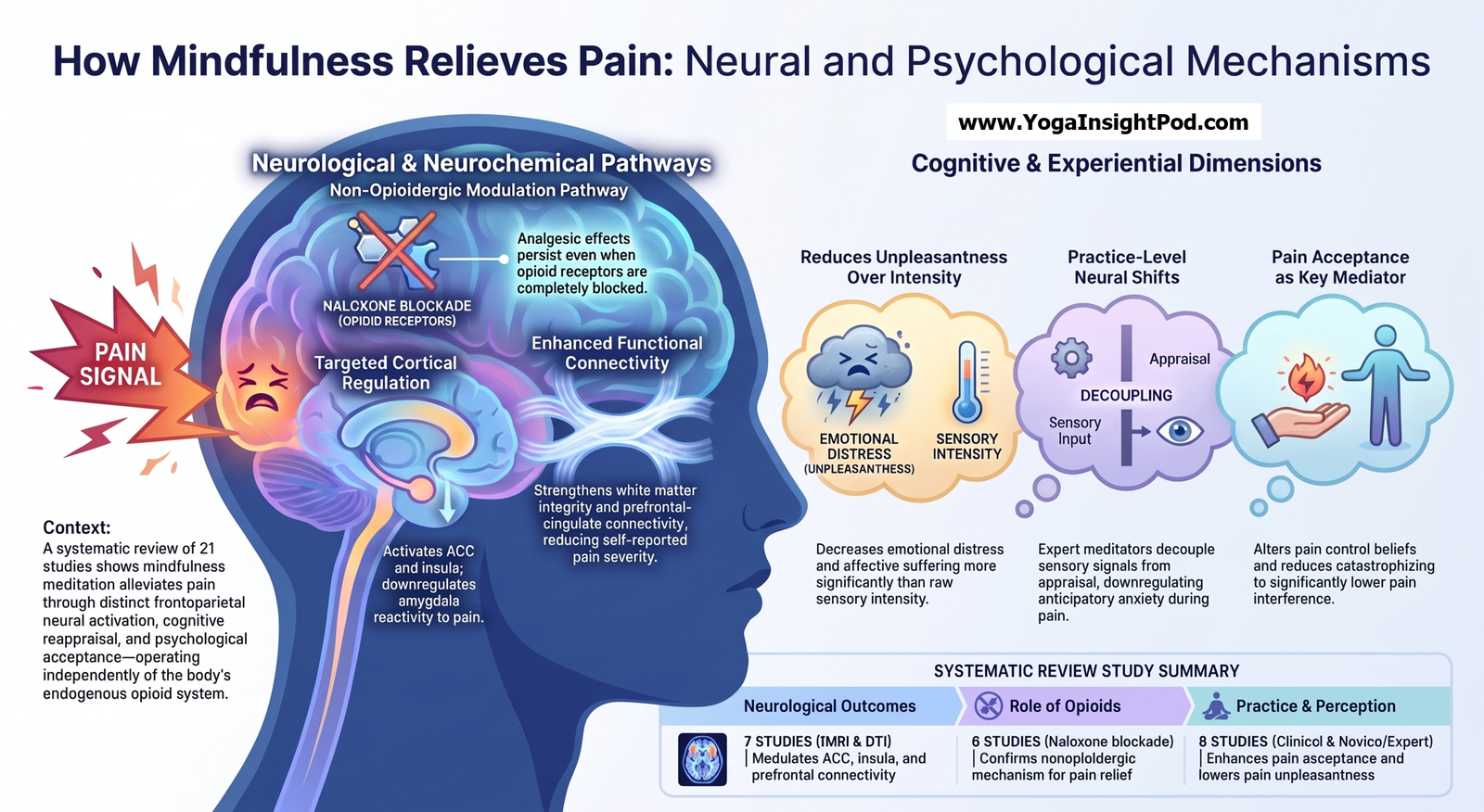
Can mindfulness meditation change how we experience pain? Discover findings from a systematic review of 21 scientific studies by Markus Ploesser and David Martin from the Fakultät für Gesundheit (Department für Humanmedizin), Lehrstuhl für Medizintheorie, examining how mindful awareness, attention, emotional regulation, and changes in brain activity may contribute to pain relief.