A 2025 review shows that slow pranayama gentle, rhythmic yogic breathing can reduce anxiety by increasing heart rate variability, enhancing vagal tone, and quieting overactive stress circuits in the brain. As an accessible, low cost practice, it offers a powerful complementary tool alongside standard anxiety treatments.
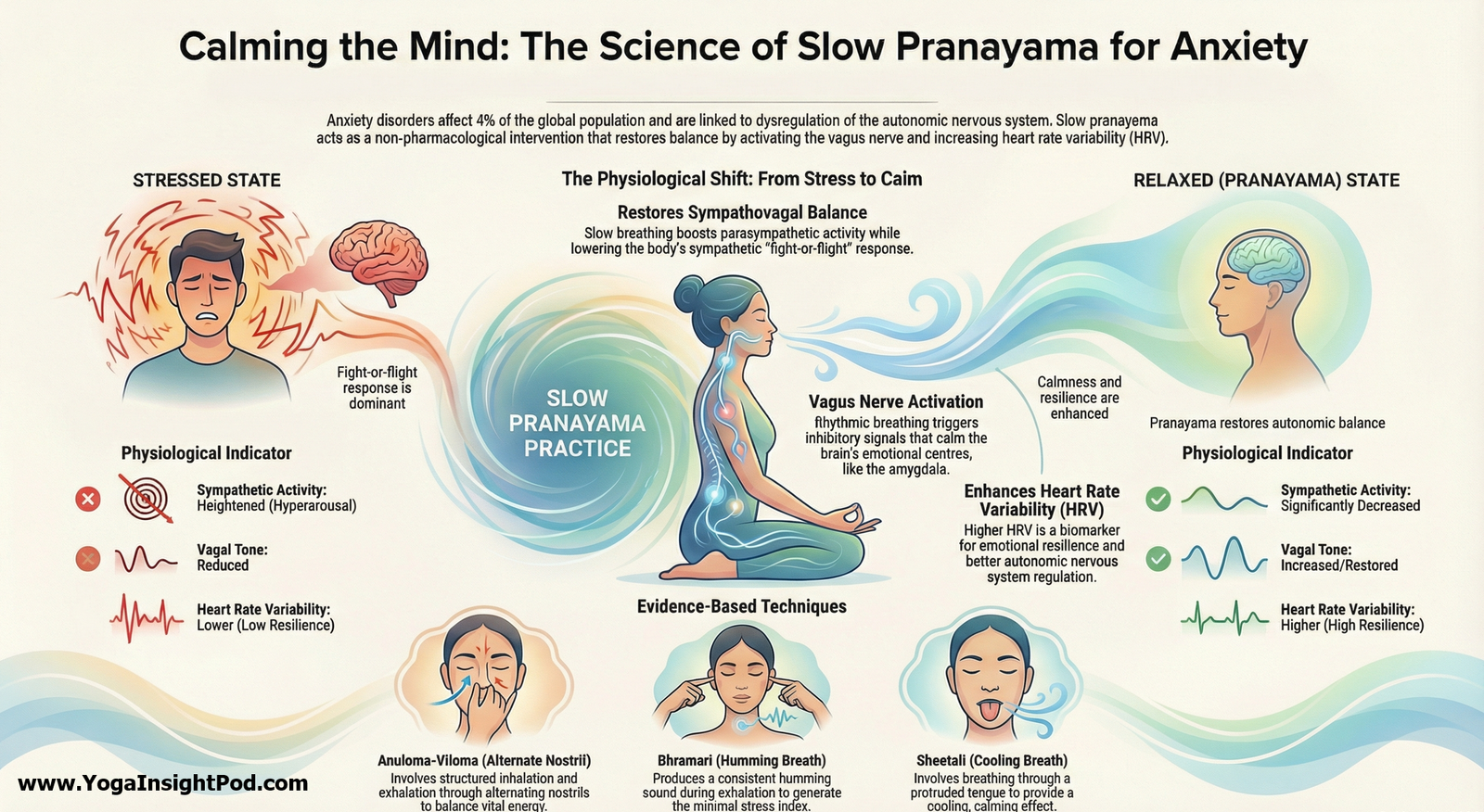
Anxiety disorders affect hundreds of millions of people worldwide and are tightly linked to dysregulation of the autonomic nervous system, including reduced heart rate variability (HRV) and chronic overactivation of the “fight-or-flight” response. A 2025 narrative review in the Journal of Family Medicine and Primary Care synthesizes recent trials to explore how slow pranayama structured yogic breathing with prolonged, gentle exhalations can act as a low cost, accessible tool to ease anxiety and restore physiological balance.
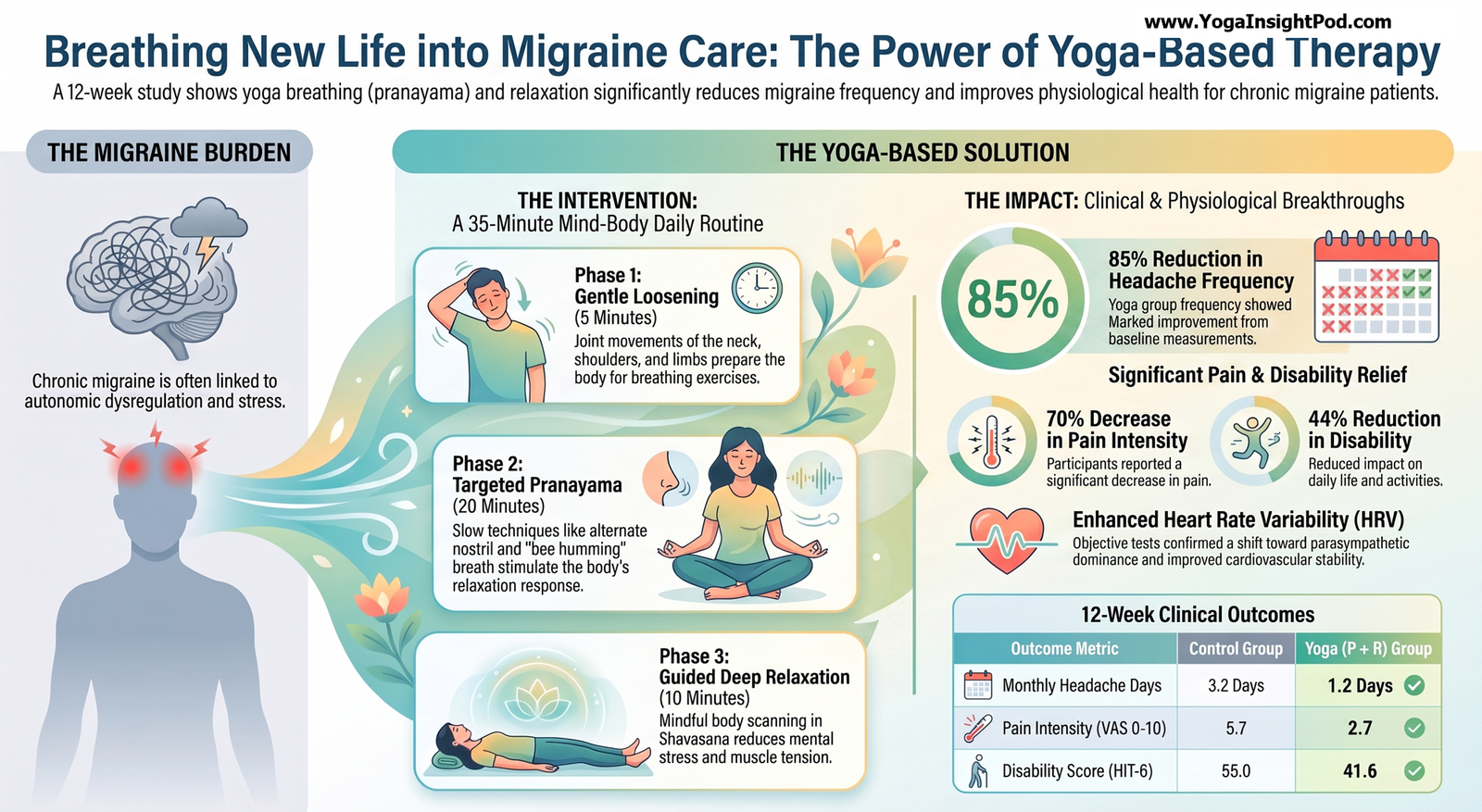
The authors highlight that pranayama is not just “deep breathing,” but a systematic practice using specific patterns of inhalation (puraka), exhalation (rechaka), and breath holds (kumbhaka) designed to regulate prana, or vital energy. Across randomized controlled trials and experimental studies, slow breathing techniques such as alternate nostril breathing (anulom vilom), left-nostril breathing (chandra nadi), bhramari (humming breath), and cooling breaths (sheetali) were associated with increased parasympathetic (vagal) activity, higher HF-HRV, reduced LF/HF ratios, lower blood pressure, and subjective reductions in stress and anxiety. A large RCT in patients receiving routine psychiatric care found that adding slow pranayama and savasana for eight weeks significantly shifted HRV toward parasympathetic dominance compared with usual care alone.
Mechanistically, slow pranayama appears to stimulate the vagus nerve and baroreflex pathways, synchronize cardiorespiratory rhythms, and dampen hyperactivity in limbic and prefrontal circuits (amygdala, anterior cingulate, insula, PFC) implicated in anxiety. These changes enhance emotional regulation, stabilize internal physiology, and build stress resilience. While most studies are small and methodologically limited, the review concludes that slow pranayama is a promising adjunct to conventional treatments especially where access to psychotherapy or medication is limited and calls for larger, well controlled trials to refine protocols, dosing, and clinical indications.