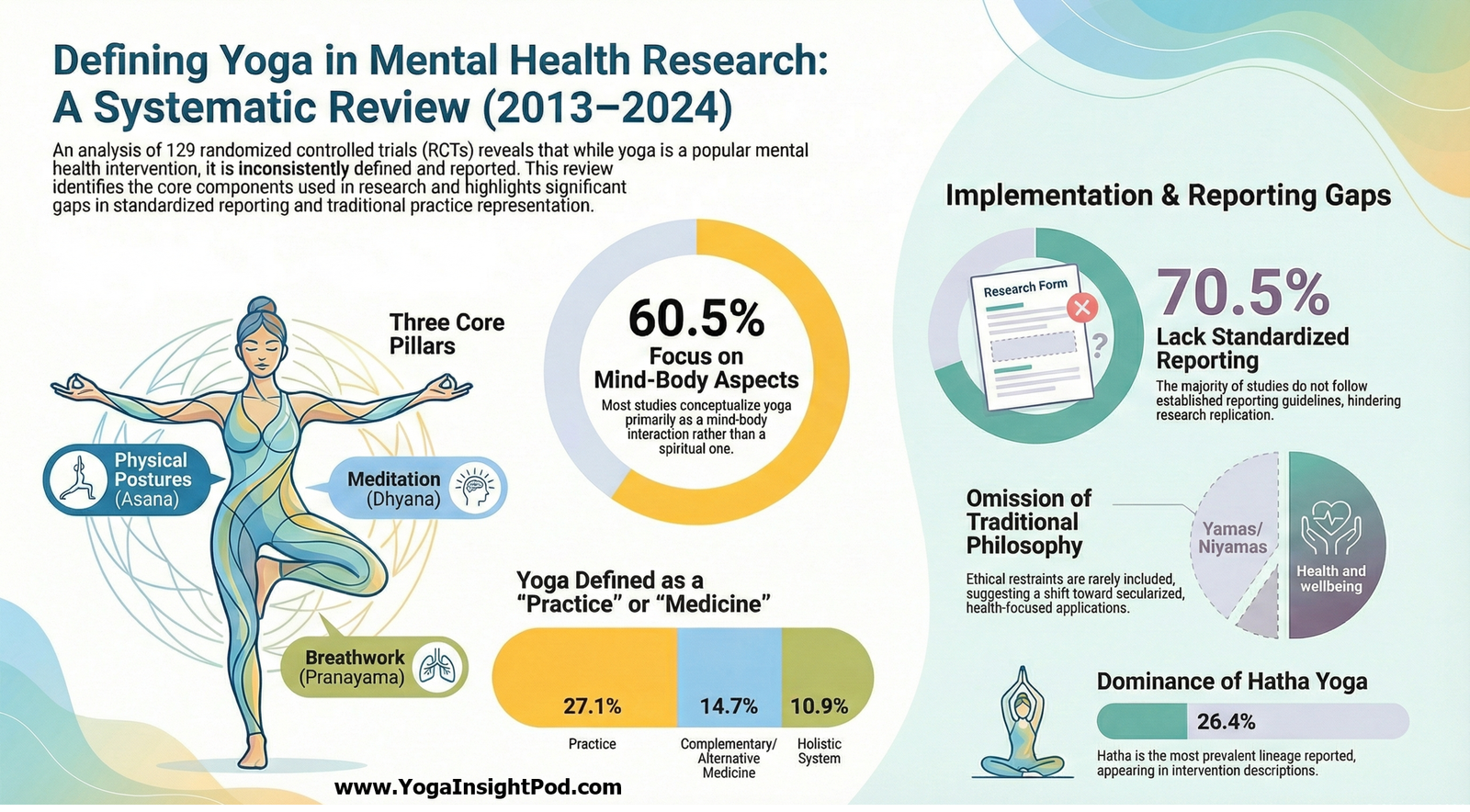
A 2026 systematic review of 129 RCTs finds that most “yoga for mental health” programs use a common trio: postures, breathwork, and relaxation/meditation, yet define yoga in many different ways. Clearer, standardized reporting is needed to know which yoga approaches best improve anxiety, depression, stress, and quality of life.
Yoga is widely promoted for reducing anxiety, depression, and stress, but research trials often describe “yoga” very differently which makes it hard to know what actually works for mental health. A 2026 systematic review in BMC Complementary Medicine and Therapies examined 129 randomized controlled trials published between 2013 and 2024 to understand how yoga is defined, structured, and reported in mental health and wellbeing research.
Across 24 countries and varied populations (from healthy adults to people with clinical mental disorders and chronic illnesses), most interventions were face to face, group-based programs delivered over 7 to 12 weeks, with 30 to 60 minute sessions in clinical or community settings. Despite this operational consistency, the way authors defined yoga was highly variable: it was described as a “practice,” “complementary medicine,” “therapy,” “system,” “lifestyle,” “mindful movement,” or simply “physical activity,” and framed as either “mind body” or “mind body spirit.”
When you look at what people actually did in sessions, however, a clear pattern emerges. Almost all trials combined three core components: physical postures and movement (asana), breathwork (pranayama), and mental practices such as relaxation, mindfulness, or meditation. Spiritual, philosophical, ethical, educational, and social elements (like discussion or yoga philosophy) were included far less often, even though many studies referenced traditional concepts and Sanskrit terms.
The authors argue that this mismatch between rich, holistic definitions and narrowly implemented protocols creates confusion, limits replication, and slows translation into routine mental healthcare. They recommend clearer, standardized reporting of yoga style, core components (movement, breath, meditation, ethics, philosophy), intensity, instructor training, and theoretical rationale so clinicians, researchers, and the public can better understand which kinds of yoga help which mental health outcomes, and why.