Explore why modern professionals are turning to yoga as "skill in action" to reclaim mental clarity and rebuild after burnout. Learn how simple, portable breathing techniques can shift your nervous system from "fight or flight" to a state of mastery, presence, and improved workplace collaboration.
Workplace stress is soaring worldwide, undermining productivity, health, and job satisfaction. A 2024 qualitative study in Frontiers in Public Health explored how regular yoga practice actually feels for employees and what they believe it does for their stress and wellbeing.
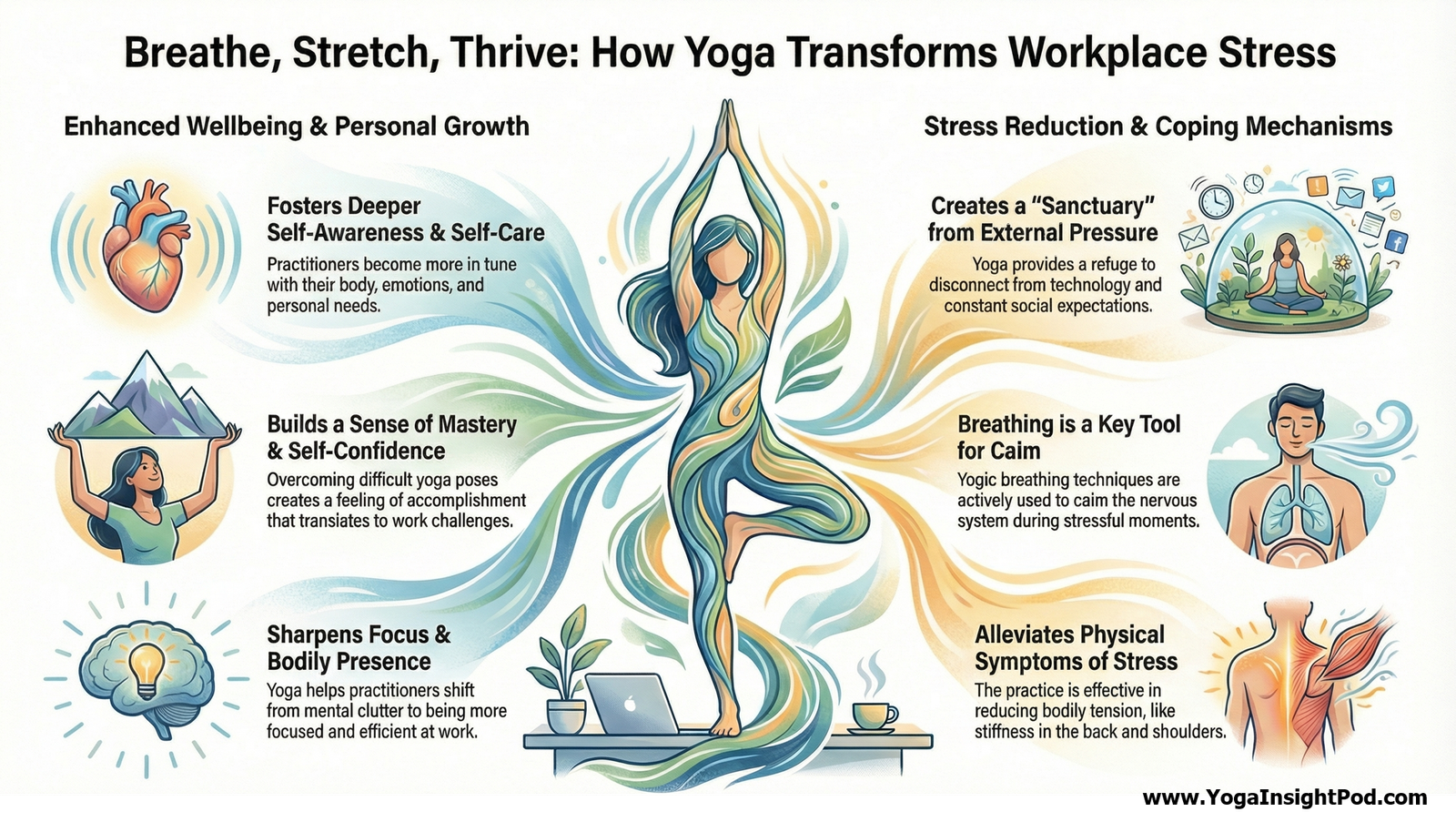
Thirteen Norwegian workers from various professions, most of whom practiced yoga at or around their workplace, were interviewed in depth about their experiences. Thematic analysis revealed four main themes, yoga as a tool for wellbeing, yoga for coping with stress and life challenges, the central role of breathing, and the importance of context (time, teacher, and location). Participants consistently described feeling more energized, light-hearted, calm, focused, and self-aware after yoga, often reporting better mood, self-care, and a stronger sense of mastery that carried into their workday. Many said yoga helped them handle pressure, difficult colleagues, heavy workloads, and even major life crises such as burnout, grief, or harassment, by giving them an “inner refuge” and more balanced reactions. Yogic breathing (pranayama) emerged as a key tool: people used simple breath practices between meetings, before presentations, or when overwhelmed to quickly downshift stress and regain presence.
Morning sessions set a calmer tone for the day, after-work classes helped “decompress,” and having yoga offered on-site, during work hours, dramatically lowered the threshold to participate and increased gratitude toward the employer. Overall, employees experienced workplace yoga not just as exercise, but as a practical way to reduce occupational stress, enhance wellbeing, and become more patient, present, and collaborative at work.