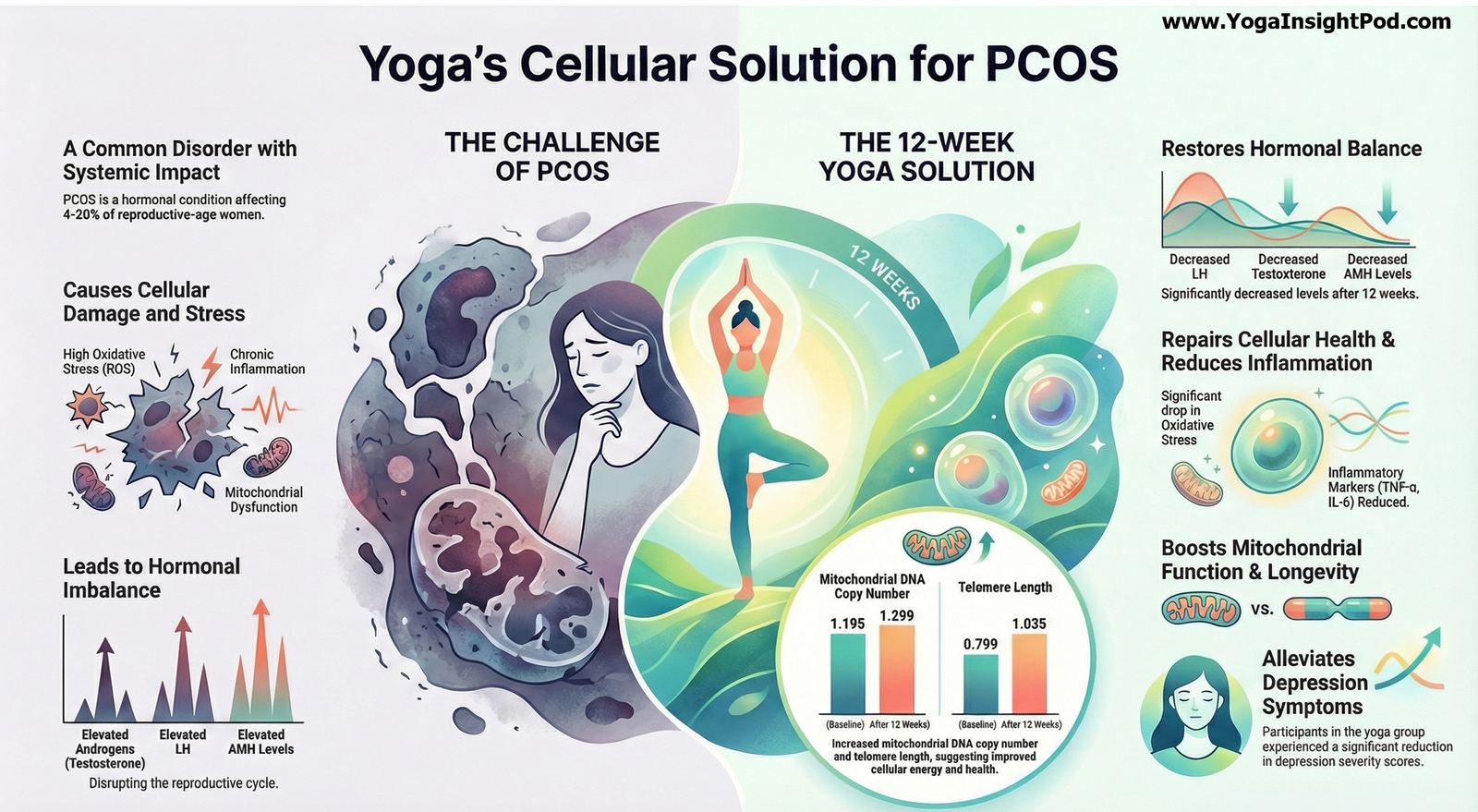
A 12 week randomized trial shows yoga can rebalance hormones, reduce oxidative stress, improve mitochondrial health, and ease depression in women with PCOS making it a powerful mind body add on to conventional treatment.
Polycystic ovary syndrome (PCOS) is more than irregular periods and cystic ovaries, it is a systemic metabolic and inflammatory condition closely linked to oxidative stress and mitochondrial dysfunction. A 2025 randomized controlled trial in the International Journal of Yoga explored whether yoga could act as a true mind body therapy for women with PCOS. Over 12 weeks, women with PCOS were assigned either to a supervised yoga program (asana, pranayama, and meditation, 5 days a week) or an active non yoga group advised to walk regularly. The yoga group showed significant improvements in key reproductive hormones: follicle stimulating hormone (FSH) increased, while luteinizing hormone (LH), LH/FSH ratio, testosterone, and anti Müllerian hormone (AMH) all decreased, suggesting better ovulatory function and reduced hyperandrogenism. On a cellular level, yoga practice reduced oxidative stress markers such as reactive oxygen species (ROS), 8 hydroxy 2’-deoxyguanosine (8 OHdG), and the lipid peroxidation marker 4 HNE, while boosting total antioxidant capacity. Mitochondrial health improved, with higher mitochondrial DNA copy number, better mitochondrial membrane potential, increased NAD+ levels, and upregulation of genes linked to mitochondrial integrity (AMPK, SIRT1, TFAM, NRF1) and the respiratory chain (NDUFA3, SDHD, COX7C, ATP5PD). Telomere length also increased in the yoga group, hinting at healthier cellular aging. Importantly, women in the yoga group reported significantly lower depression scores after 12 weeks, highlighting yoga’s impact on both mental health and biology. Together, these findings position regular yoga as a powerful adjunct therapy for PCOS supporting hormones, metabolism, mitochondrial function, and emotional well being alongside standard medical care.