Modern mindfulness research is uncovering measurable effects on the brain, stress biology, and emotional health. This YogaInsightPod article explores how neuroscience and meditation are converging to reshape mental wellness.
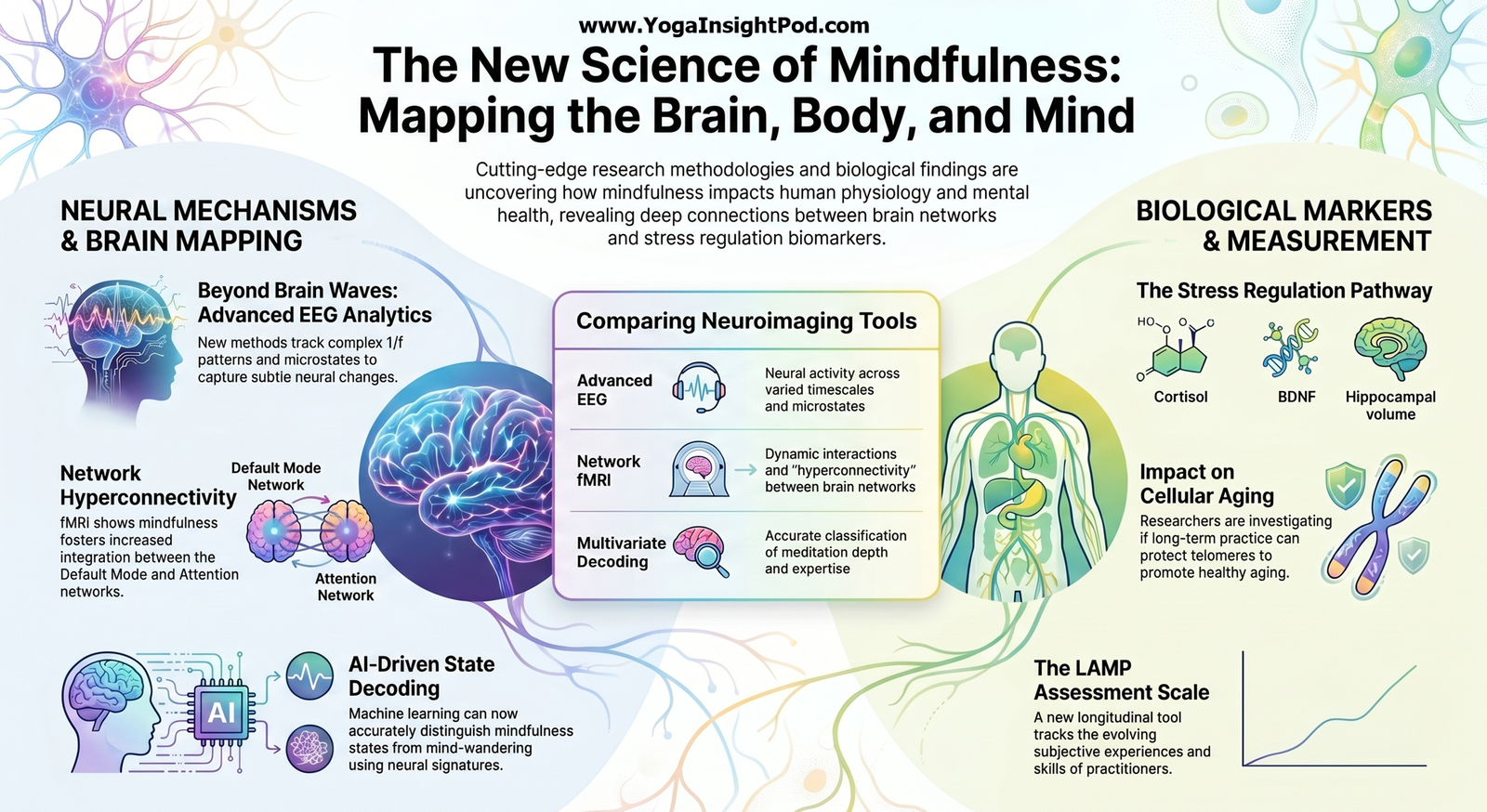
Mindfulness is no longer viewed as just a spiritual or relaxation practice it is rapidly becoming one of the most researched areas in neuroscience and mental health. The paper “Introduction to the Special Issue on Mindfulness: Measurement, Methods, Mechanisms, & Mental Health” by Todd S. Braver from Washington University and Sara W. Lazar from Harvard Medical School and Massachusetts General Hospital highlights how scientists are now using advanced technologies such as EEG brainwave monitoring, functional MRI (fMRI), machine learning, and biological markers to better understand how mindfulness affects the human mind and body.
Researchers are investigating how meditation influences attention, emotional regulation, stress resilience, and even brain network organization. Studies discussed in the paper show that mindfulness may alter activity within the brain’s default mode network, which is strongly associated with mind-wandering, rumination, and anxiety. Other findings suggest mindfulness practices could impact cortisol levels, brain-derived neurotrophic factor (BDNF), and hippocampal health all important for stress regulation and cognitive well-being. The paper also emphasizes a major shift in mindfulness science: moving beyond simple “feel-good wellness” claims toward rigorous, measurable biological and psychological mechanisms. Scientists are now exploring whether machine learning can identify meditation states from brain activity and whether mindfulness training can produce lasting changes in brain connectivity and healthy aging. As modern neuroscience continues to explore mindfulness, the field is entering an exciting era where ancient contemplative practices and cutting-edge brain science are beginning to intersect in powerful ways.