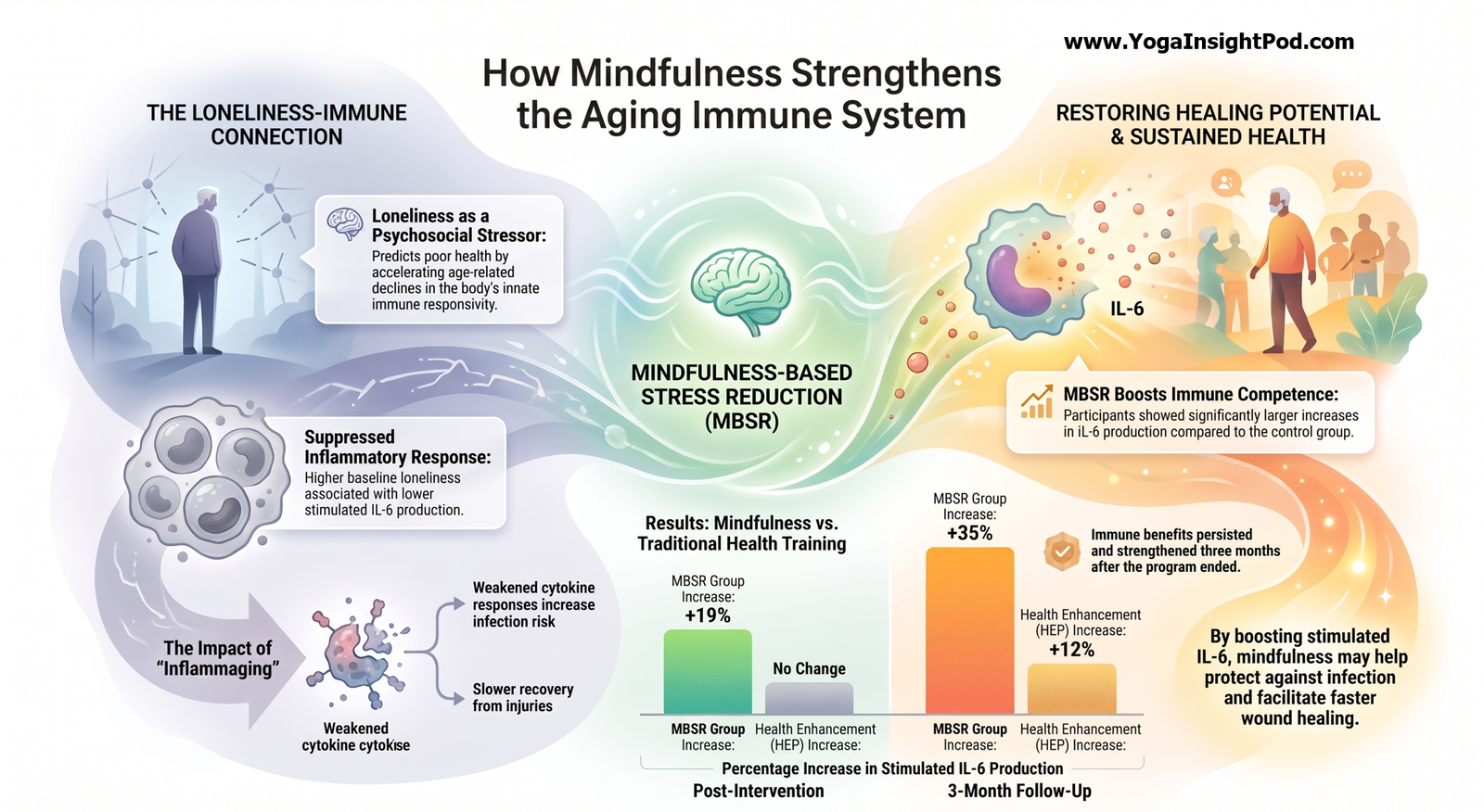
A randomized controlled trial led by Emily K. Lindsay and colleagues from the University of Pittsburgh, Carnegie Mellon University, and Virginia Commonwealth University examined whether Mindfulness-Based Stress Reduction could improve stimulated IL-6 production, a laboratory measure of innate immune responsiveness, among lonely adults aged 65–85.
Loneliness is more than an emotional experience. The authors of this study describe it as a chronic psychosocial stressor that may accelerate age-related declines in immune competence. The randomized controlled trial enrolled 190 healthy, lonely, meditation-naïve adults aged 65–85. Participants completed either an eight-week Mindfulness-Based Stress Reduction program or a structurally matched Health Enhancement Program involving exercise, nutrition, music, and other health practices.
Researchers measured how participants’ immune cells produced interleukin-6, or IL-6, after exposure to lipopolysaccharide in the laboratory. This stimulated response was used as an indicator of how effectively the innate immune system could respond to a bacterial challenge. Compared with the health program, MBSR produced significantly greater increases in stimulated IL-6 production immediately after the intervention and at the three-month follow-up. The MBSR group showed an approximately 19% increase after treatment and a 35% increase at follow-up. No study-related adverse events were reported. Importantly, stimulated IL-6 production is not the same as chronically elevated IL-6 in the bloodstream. The study assessed immune responsiveness under laboratory stimulation, not systemic inflammation.
The findings suggest that mindfulness training may help preserve innate immune responsiveness in lonely older adults. However, the study did not measure infections, wound healing, vaccine responses, or other long-term clinical outcomes. Further research is needed before concluding that the biological changes translate into improved health.