A study of 61 pre-teen children led by Shirley Telles and colleagues from the PatanjaliYogpeeth investigated whether a brief yoga breathing practice could immediately influence attention and anxiety. The findings offer promising but preliminary insights for school-based wellness programs.
Pre-teen children often experience increasing academic pressure while navigating the social and emotional transition toward adolescence. Could a brief yoga breathing practice help them feel calmer and more attentive?
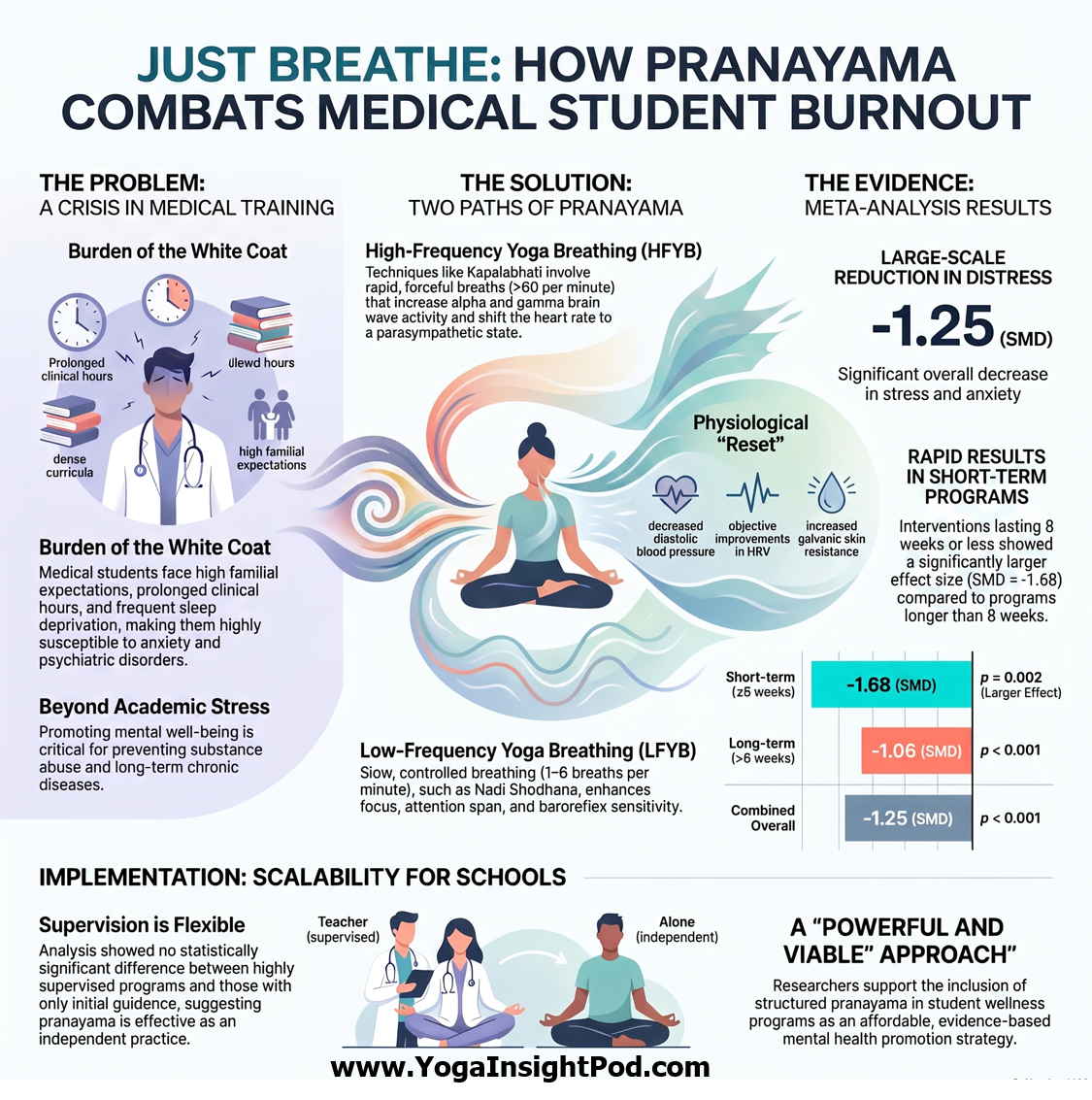
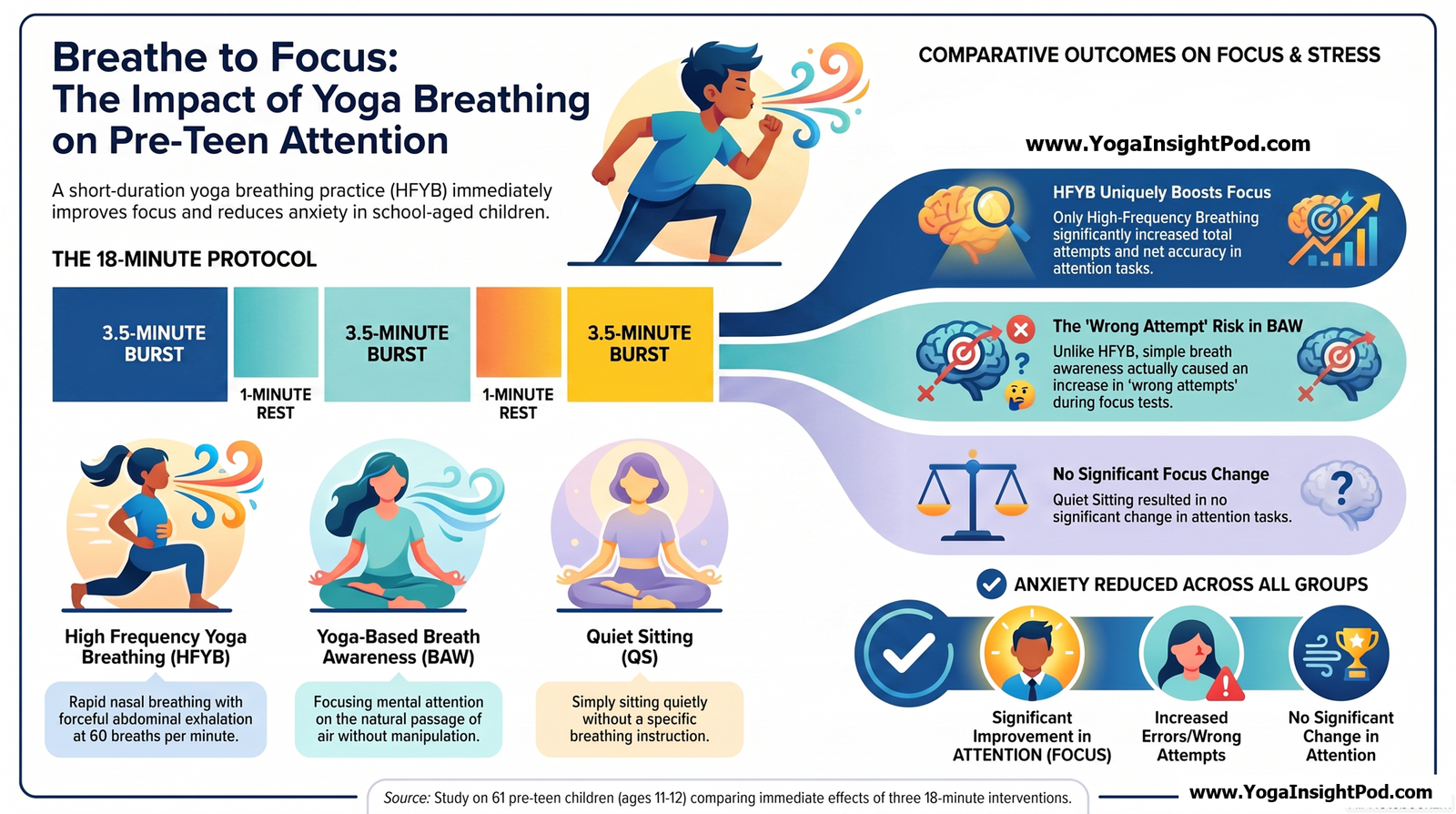
Researchers studied 61 children between 11 and 12 years of age, including 25 girls. Each child completed three separate 18-minute sessions: high-frequency yoga breathing, yoga-based breath awareness, and quiet sitting. The high-frequency breathing practice involved rapid nasal breathing with active abdominal exhalations at approximately 60 breaths per minute. Attention was measured using a six-letter cancellation task, while state anxiety was assessed immediately before and after each session.
Following high-frequency yoga breathing, the children attempted more items and achieved higher net attention scores. Breath awareness did not produce the same improvement and was associated with an increase in incorrect attempts. Anxiety, however, decreased after all three conditions including quiet sitting. The attention findings were primarily observed among the girls. Boys experienced reductions in anxiety but did not show significant changes in the attention task.
These results suggest that correctly taught high-frequency yoga breathing may offer a brief way to support attention while also reducing immediate anxiety. However, the participants already had one to two years of yoga experience, attended a residential school, and were not beginners. The researchers therefore cautioned that the results may not automatically apply to inexperienced children or all school environments.