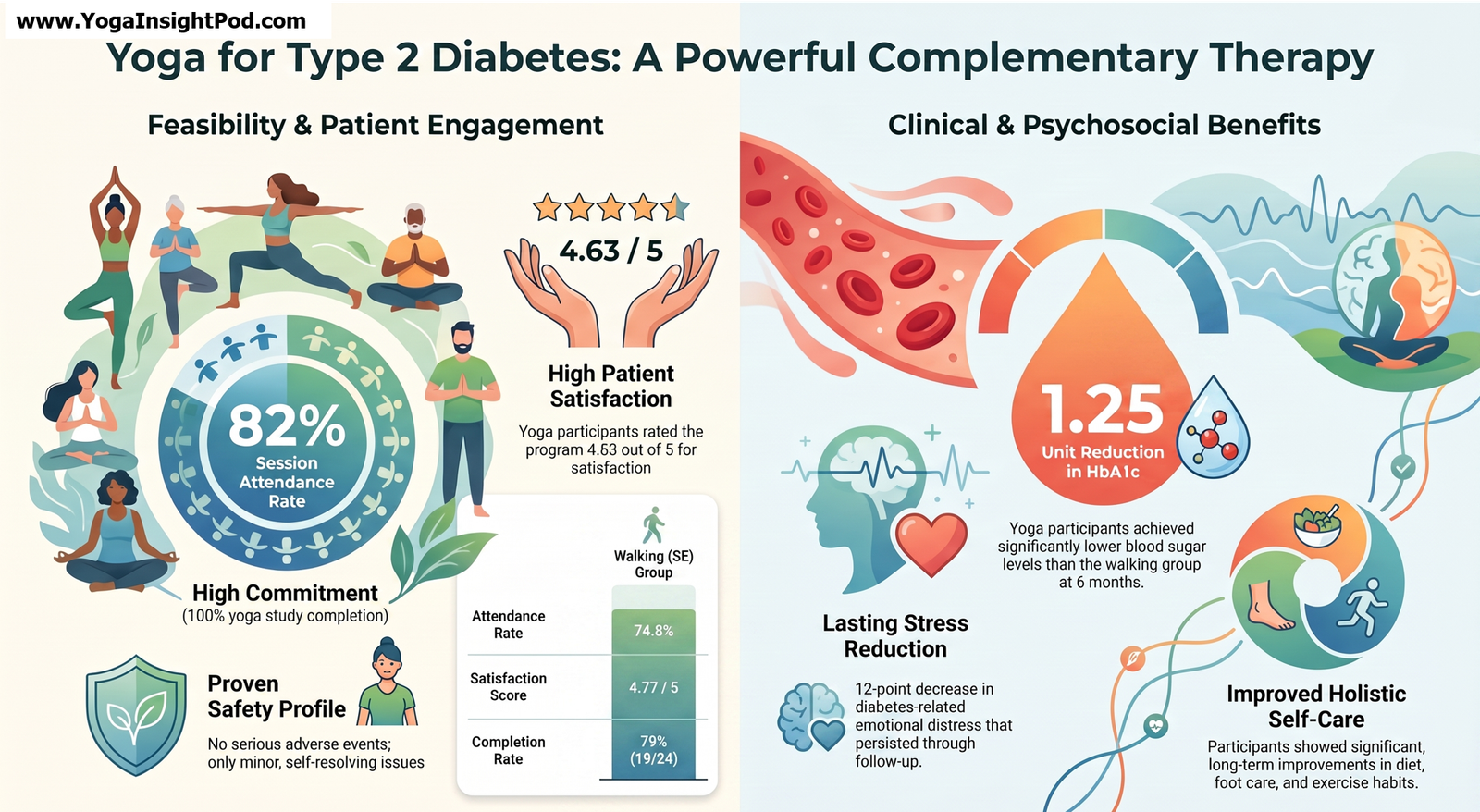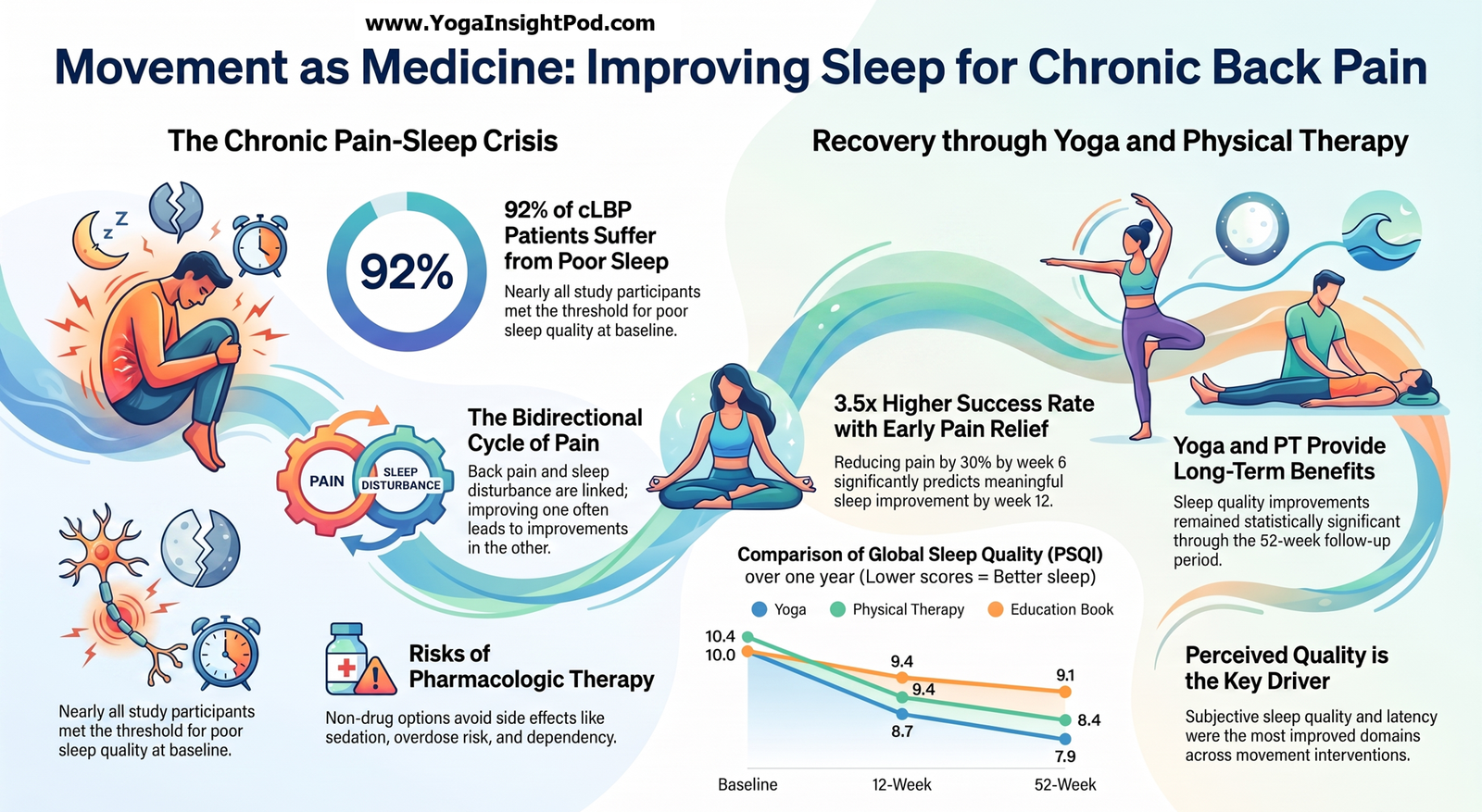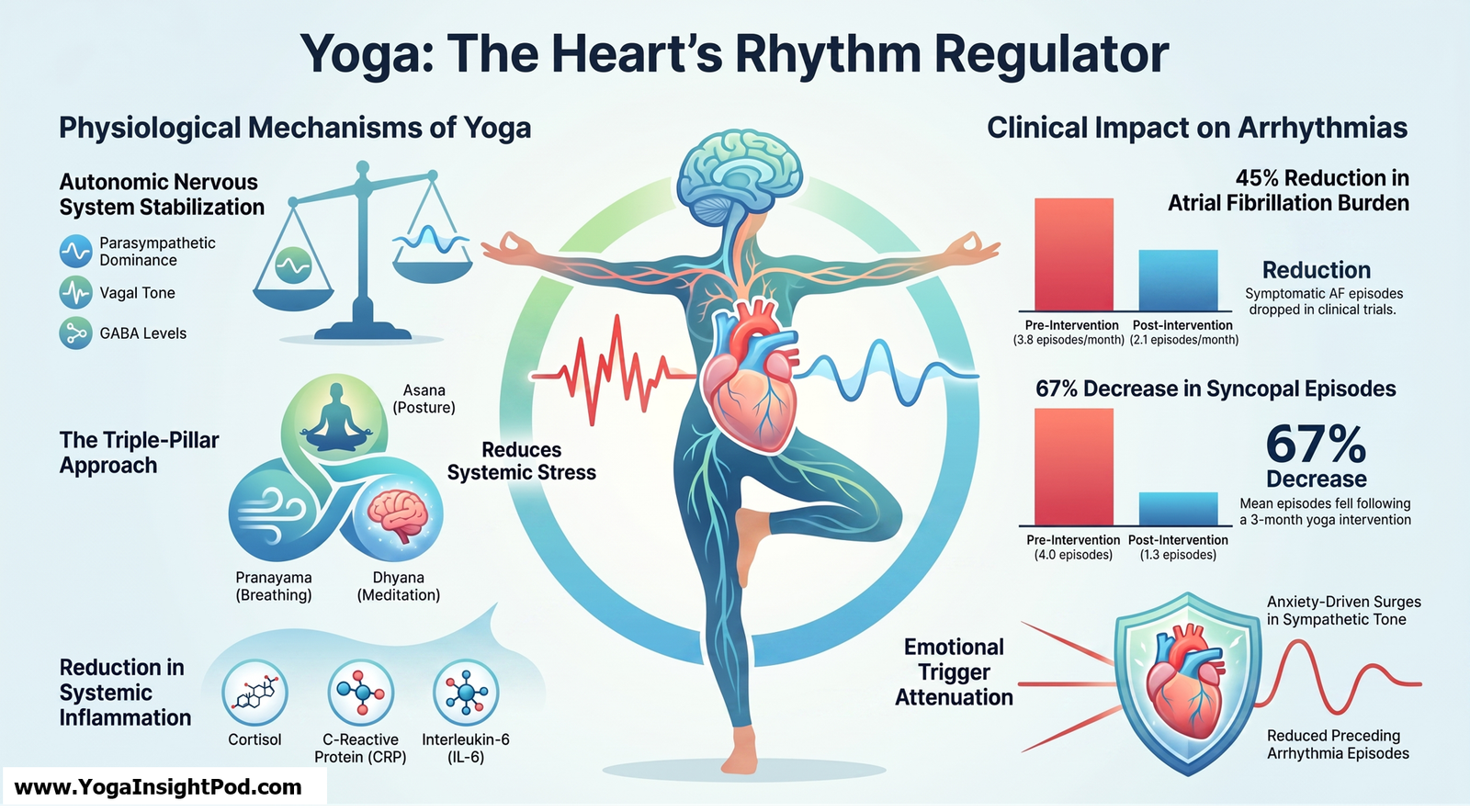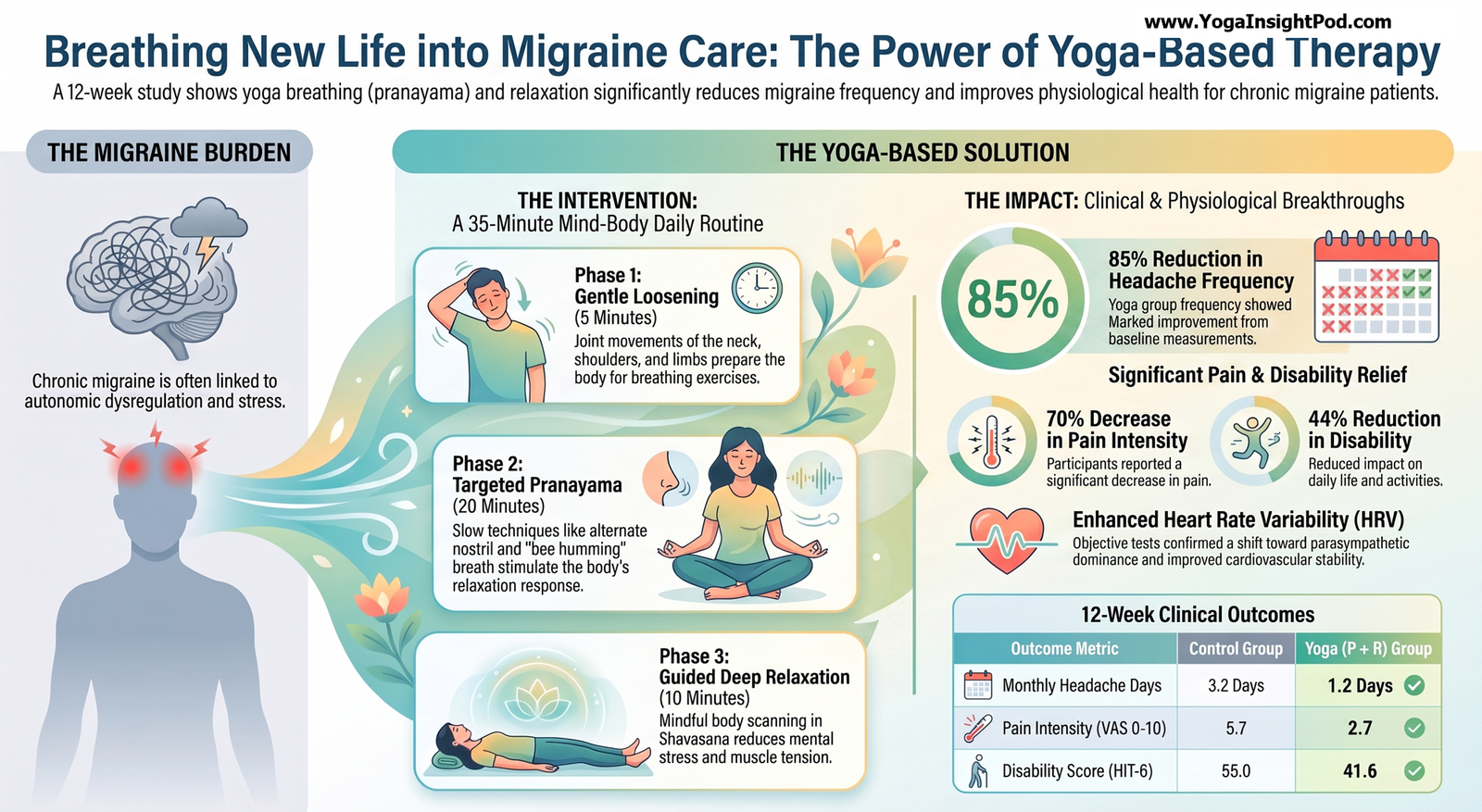
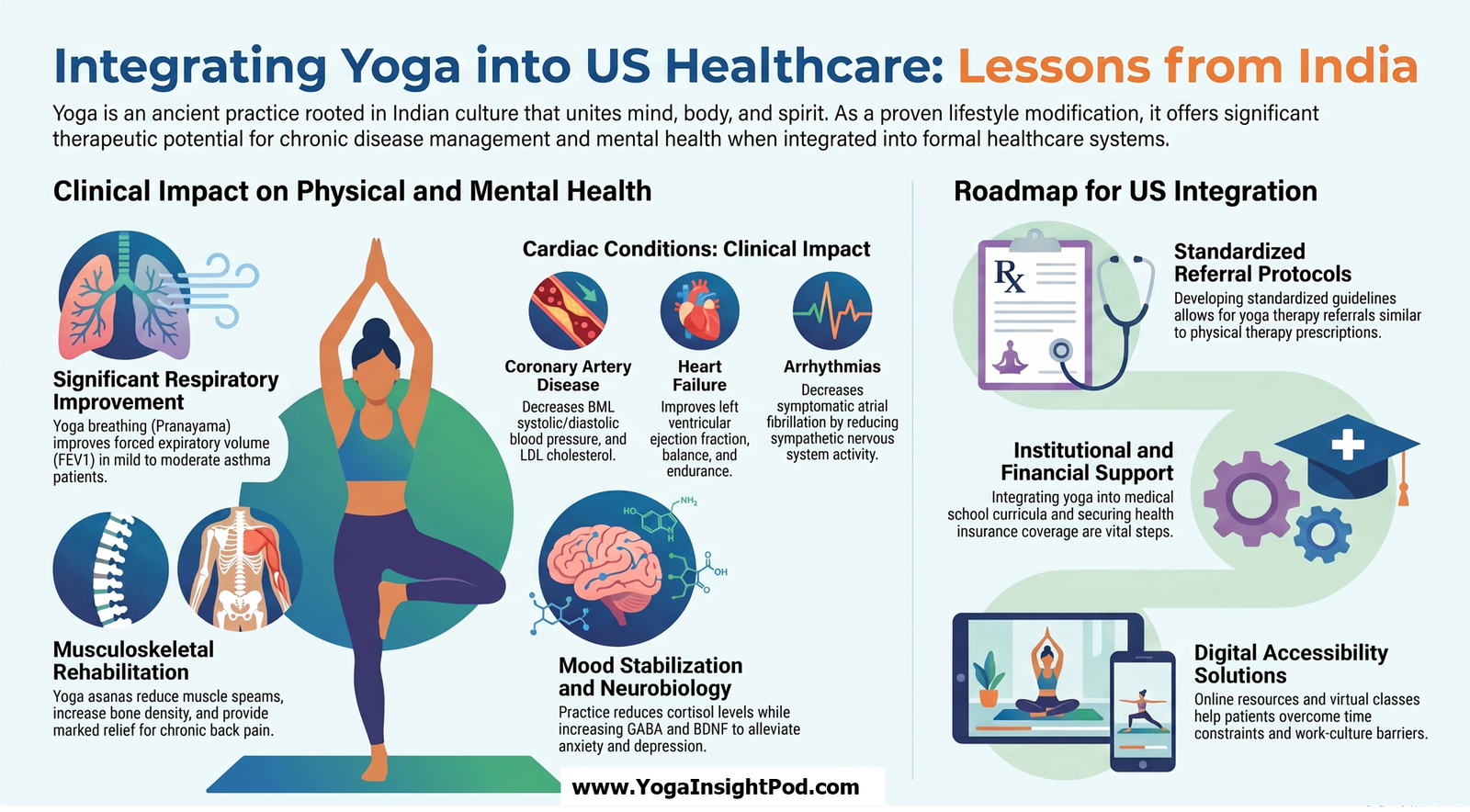
Could yoga become a more formal part of American healthcare? A narrative review by Puja Yatham and colleagues from Herbert Wertheim College of Medicine and Jagadguru Sri Shivarathreeshwara Medical College examines India's experience integrating yoga into healthcare and identifies opportunities, barriers, and potential pathways for the United States.
Yoga is widely practiced for health and well-being, but could it become a more structured part of the U.S. healthcare system? The narrative review Lessons From India: A Narrative Review of Integrating Yoga Within the US Healthcare System examines how India has incorporated yoga into healthcare and considers lessons that may be applicable in the United States. The authors identify potential roles for yoga in preventive medicine, chronic disease management, behavioral health, and rehabilitation.
One model highlighted is India's National Institute of Mental Health and Neurosciences (NIMHANS), where trained yoga professionals screen patients and develop diagnosis-specific yoga modules. Similar approaches have expanded into specialties including cardiology, neurology, oncology, psychiatry, pediatrics, and orthopedics, although the authors caution that the tertiary-care model may be difficult to replicate directly elsewhere.
For the United States, substantial barriers remain. These include cost, fear of injury, limited patient time, insufficient professional awareness, lack of standardized yoga therapy protocols, and uncertainty surrounding reimbursement. The review proposes a broader strategy: evidence-based yoga guidelines, healthcare-provider education, medical-school training, stronger clinical research, community programs, and potentially insurance reimbursement. The central message is not that yoga should replace conventional medicine. Rather, the authors envision yoga as an adjunct within an integrative healthcare model, supported by evidence, appropriate training, standardization, and greater accessibility.