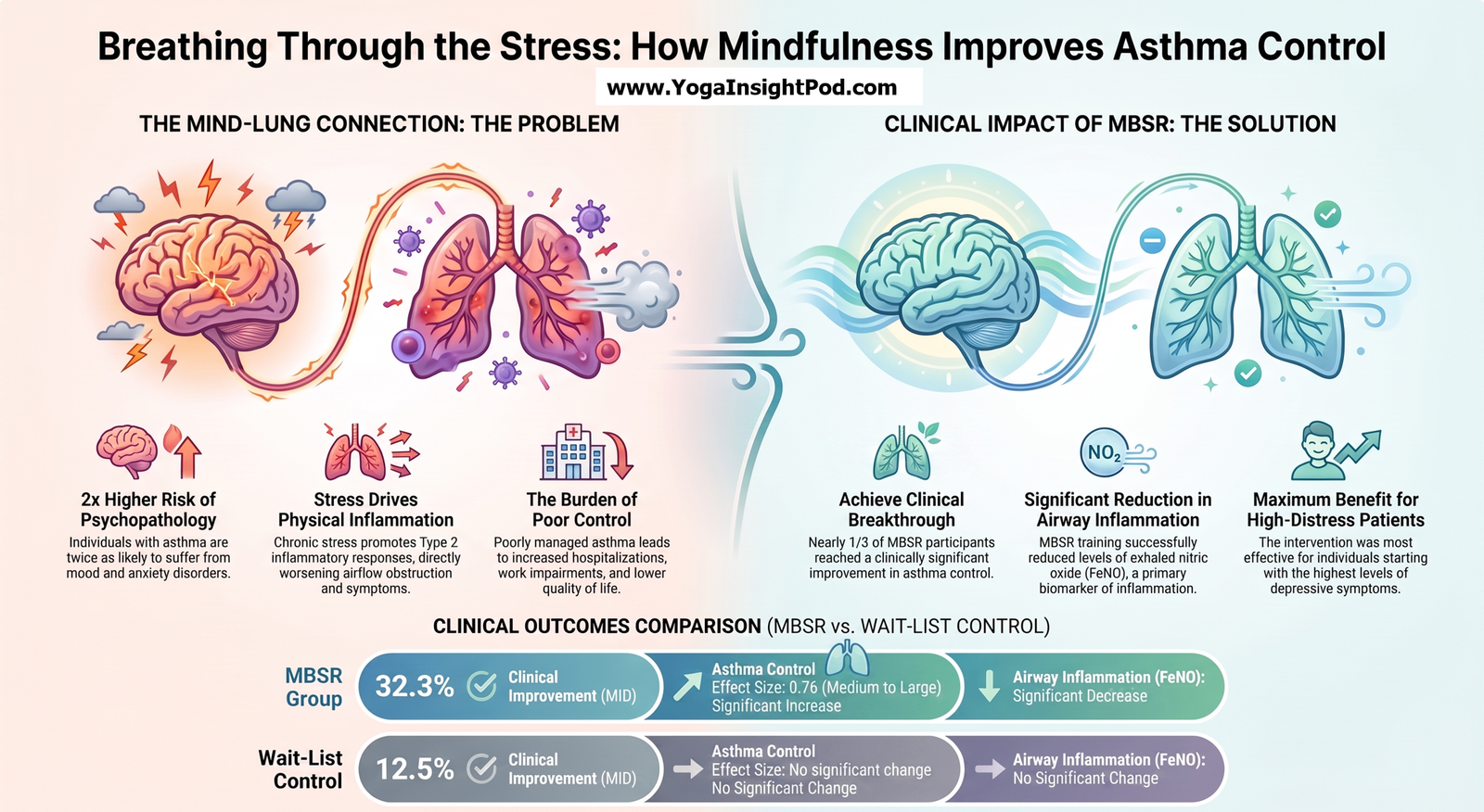
Mindfulness-Based Stress Reduction is designed to change how we relate to stress, emotions, and bodily experiences. A randomized clinical trial led by Melissa A Rosenkranz and colleagues from University of Wisconsin-Madison, and University of Wisconsin School of Medicine and Public Health-Madison explored whether these changes could also be associated with clinically meaningful physical outcomes.
Mindfulness-Based Stress Reduction, or MBSR, goes beyond simply trying to relax. Its central aim is to cultivate nonjudgmental awareness of thoughts, emotions, bodily sensations, and experiences rather than automatically reacting to or avoiding them. In this randomized controlled trial, adults with asthma participated in a standard 8-week MBSR program consisting of weekly 2.5-hour sessions, a 6-hour intensive retreat, and daily home practice. Training included breath-focused attention, body scans, seated mindfulness, walking meditation, and mindful yoga.
Following MBSR, participants showed significantly increased mindfulness compared with wait-list controls. Changes were particularly evident in observing experiences, non-judging of inner experience, and non-reactivity. Psychological distress also decreased. These psychological changes occurred alongside clinically relevant findings. Asthma control improved significantly in the MBSR group, with a medium-to-large effect size, and the improvement was maintained four months after the intervention. About one-third of MBSR participants achieved a clinically meaningful improvement in asthma control. The researchers also observed reductions in exhaled nitric oxide, a marker of airway inflammation.
Importantly, MBSR is not designed primarily to eliminate symptoms. Instead, it trains people to relate differently to stress, emotions, and bodily sensations. This study raises an intriguing possibility: changing that relationship may have effects extending beyond psychological well-being into measurable aspects of physical health. The study lacked an active comparison group, so future research is needed to separate mindfulness-specific effects from factors such as social support and expectancy.