A randomized controlled trial led by M.U. Sujan, Talakad N Sathyaprabha and colleagues from JSS Academy of Higher Education and Research, Central Research Institute of Yoga and Naturopathy, Central Council for Research in Yoga and Naturopathy, MGM Arogya Dhama, Kodagu Institute of Medical Sciences, National Institute of Mental Health and Neurosciences, and Jindal Nature Cure Institute examined whether structured pranayama and relaxation could complement standard migraine treatment. The findings connect a regular yoga-breathing practice with measurable changes in HRV, heart rate, blood pressure, and clinical outcomes.
Breathing is sometimes treated as a secondary component of yoga, but a randomized controlled trial by Sujan and colleagues placed pranayama at the center of a structured mind-body intervention.
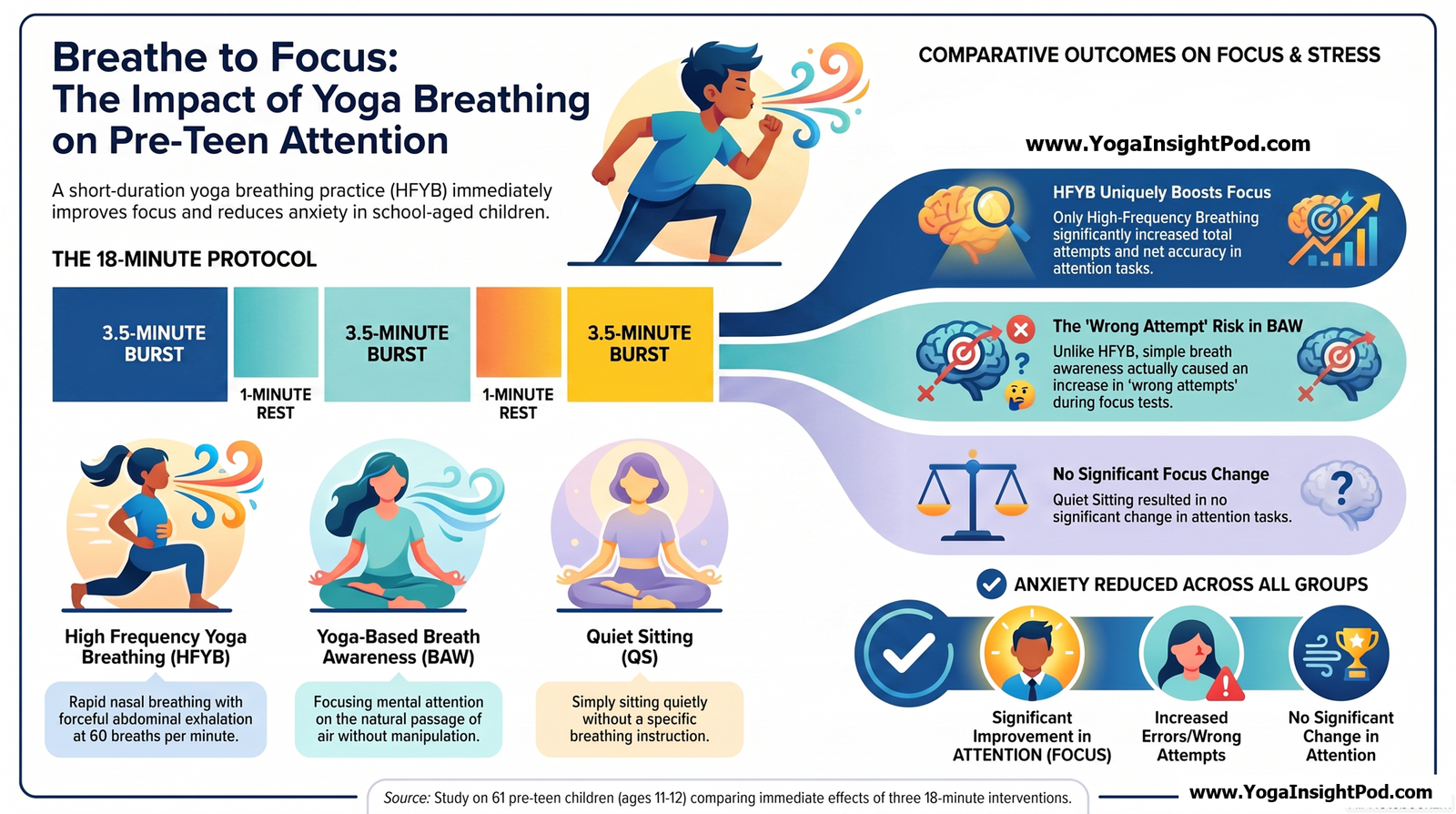
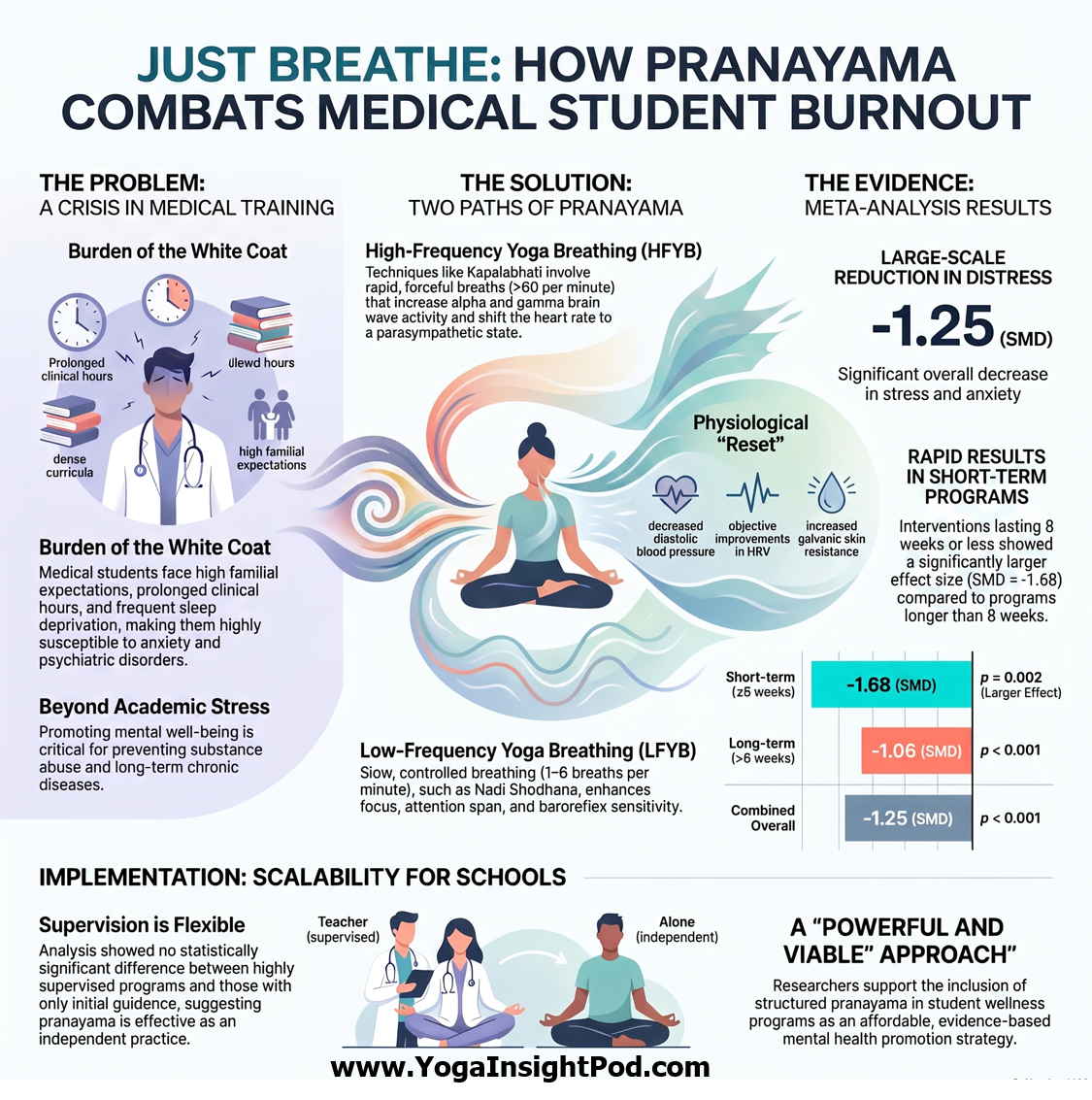
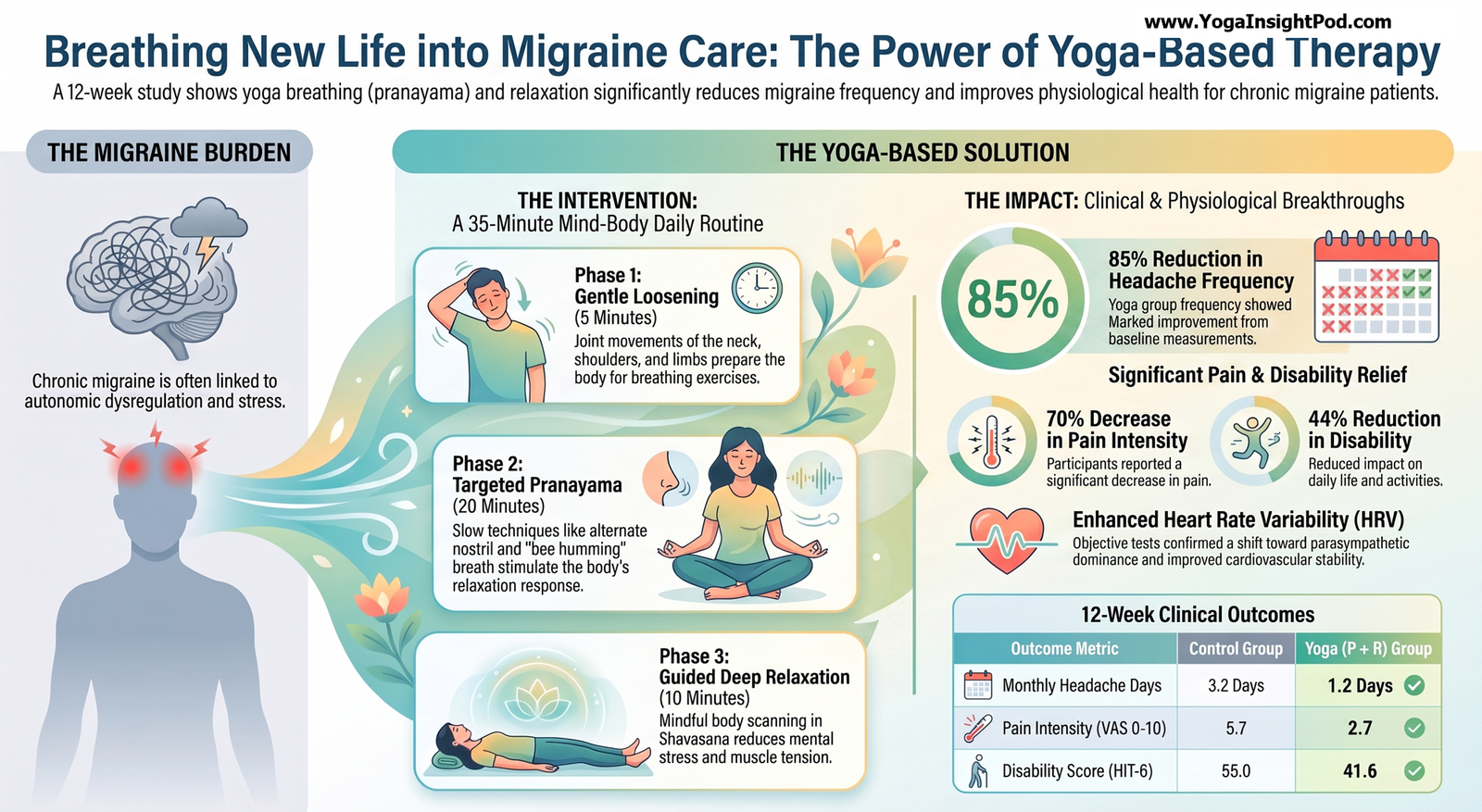
Ninety participants completed the 12-week trial. One group received standard medical care, while the intervention group added a structured yoga program consisting of approximately 5 minutes of gentle loosening exercises, 20 minutes of pranayama, and 10 minutes of guided relaxation. The breathing sequence included hand-stretch breathing, hand-in-and-out breathing, full yogic breathing, Nadi Shuddhi (alternate nostril breathing), Sheetali, and Bhramari, performed slowly with prolonged exhalation.
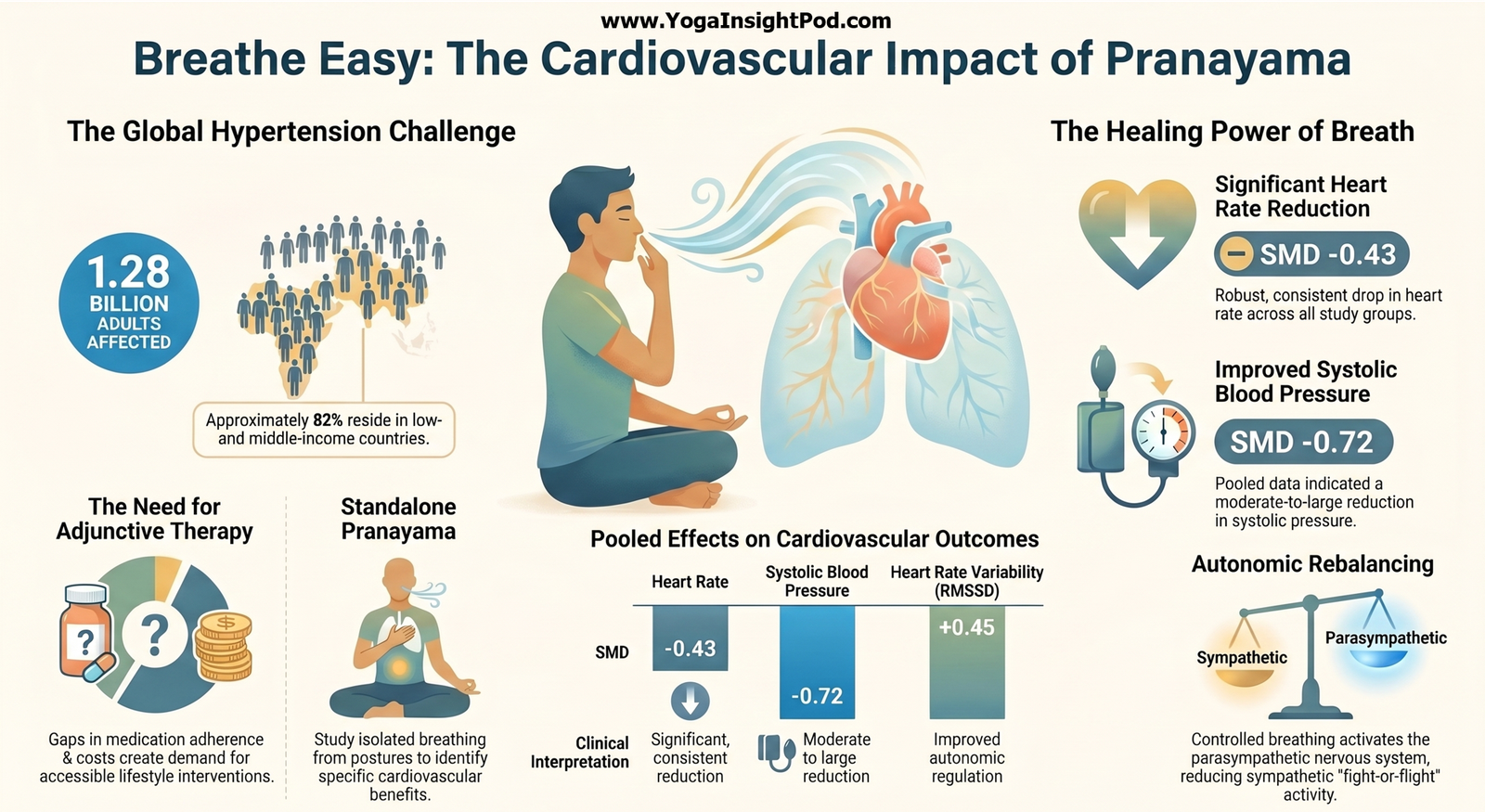
The pranayama-and-relaxation group experienced greater improvements in headache frequency, pain intensity, disability, and several quality-of-life measures than the standard-care group. But perhaps the most interesting findings involved autonomic regulation. RMSSD and high-frequency HRV increased, while the LF/HF ratio decreased; resting heart rate and blood pressure also improved in the intervention group. These physiological changes are consistent with the study's proposed shift toward greater parasympathetic regulation. Importantly, however, the intervention combined several breathing practices with relaxation, so the study cannot determine which individual pranayama produced the effects. The authors also emphasize that this was a single-center study with a modest sample and no active comparator, making larger multicenter trials necessary before drawing stronger mechanistic conclusions.