A clinical study led by Eric J. Roseen and colleagues from Boston University School of Medicine, Boston Medical Center, Massachusetts General Hospital Institute of Health Professions, Brigham and Women’s Hospital, Harvard Medical School, Kaiser Permanente Washington Health Research Institute, and the University of Washington examined whether yoga could improve sleep quality in adults experiencing chronic low back pain. The findings suggest modest improvements after yoga, with sleep benefits that may continue over the longer term.
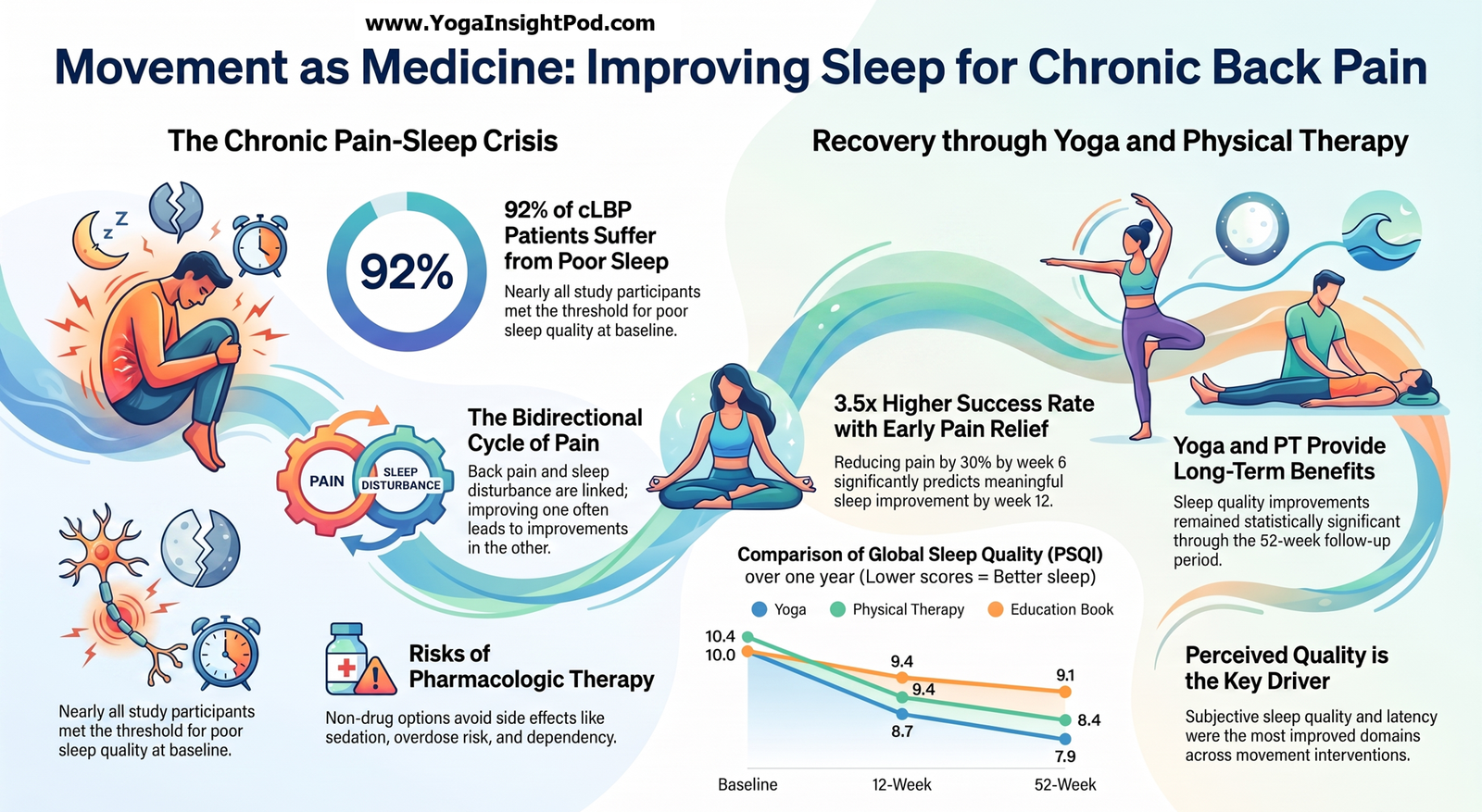
Poor sleep was remarkably common among participants in this study: 92% had poor sleep quality at baseline. Researchers examined whether yoga, physical therapy, or back-pain education could influence sleep in 320 adults participating in the Back to Health randomized controlled trial.
The yoga program was designed for people who were new to yoga. Participants could attend 12 weekly 75-minute classes incorporating yoga poses, breathing, relaxation, and meditation. Poses were adapted to individual abilities using chairs, straps, and blocks, and participants were encouraged to practice at home for 30 minutes daily. After 12 weeks, the yoga group showed a modest improvement in overall sleep quality. About 35% of yoga participants achieved a clinically meaningful improvement in sleep, compared with 25% receiving education, although this difference was not statistically significant.
The longer-term finding was particularly interesting. At 52 weeks, improvement in overall sleep quality was significantly greater with yoga than with education, and perceived sleep quality was the sleep domain that improved most in the yoga and physical therapy groups. The researchers emphasize that yoga was designed primarily for back pain not specifically for sleep. They suggest future studies could explore bedtime-focused yoga or combine yoga with established sleep strategies.