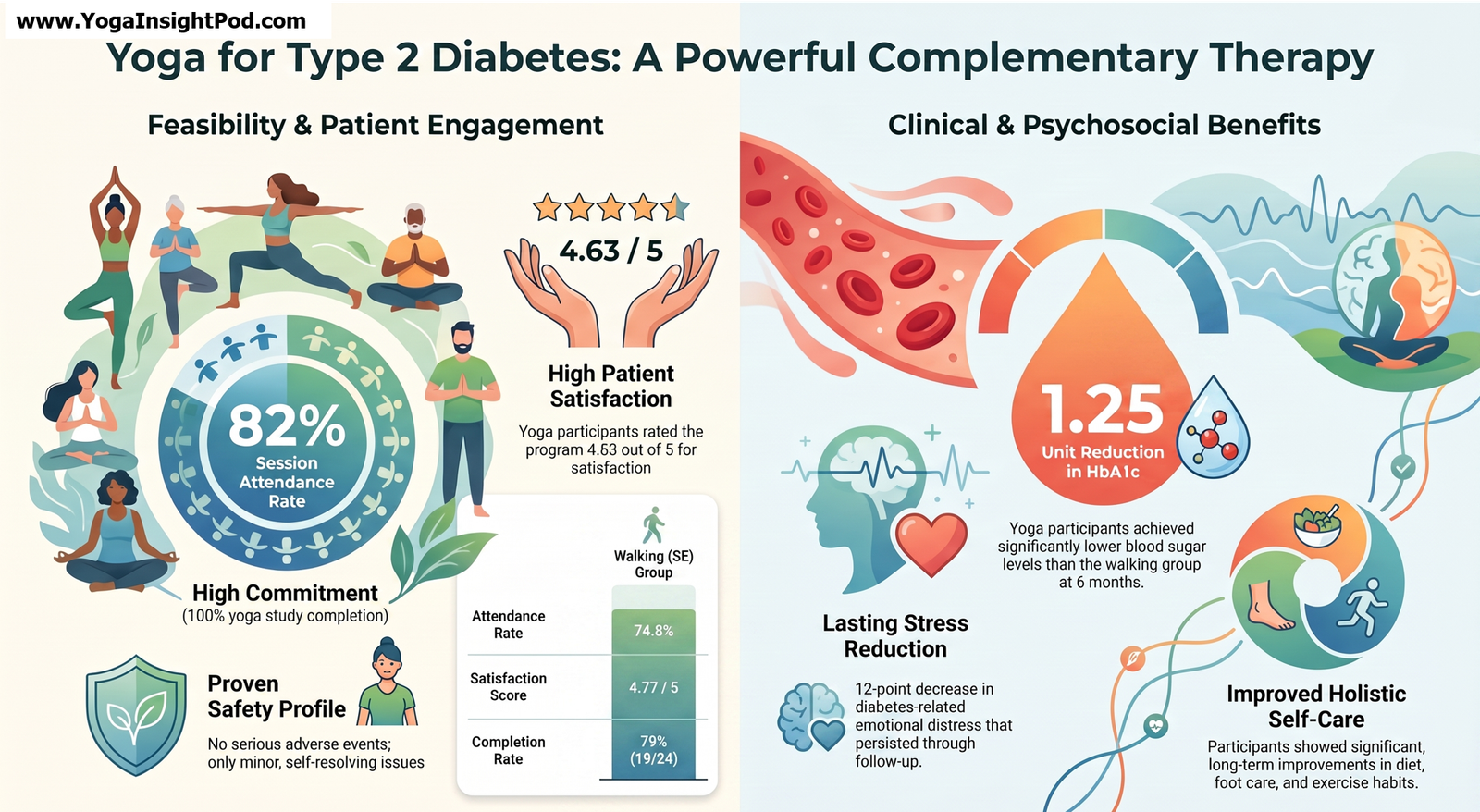
The HA1C study led by Beth Bock and colleagues from Centers for Behavioral and Preventive Medicine, The Miriam Hospital, Alpert Medical School of Brown University explored whether a structured Iyengar yoga program was practical and acceptable for adults with type 2 diabetes and whether the practice might influence blood glucose, self-care, mindfulness, and emotional well-being.
The Healthy Active and in Control (HA1C) study tested yoga as a complementary approach for adults with type 2 diabetes. Forty-eight participants were randomized to either Iyengar yoga or supervised standard exercise, with both programs delivered twice weekly for 12 weeks. The yoga sessions lasted 60 minutes and were taught by certified Iyengar instructors. Rather than focusing only on physical exercise, classes combined guided meditation and breath-work, active and passive standing and sitting asanas, twists, restorative postures, and guided relaxation. Blocks, blankets, and other props helped participants achieve and maintain postures more comfortably.
Participation was encouraging: yoga participants attended 82% of classes, and 87.5% reported practicing at home by the end of the intervention. Many continued practicing months later. The study also reported promising longer-term findings. Among participants with higher baseline HbA1c, median HbA1c at six months was 1.25 units lower in the yoga group than in the standard-exercise group. Yoga participants also showed improvements in emotional distress, self-care activities, and eventually mindfulness.
The investigators emphasized that HA1C was a small feasibility pilot, not a definitive efficacy trial. Still, the findings suggest that Iyengar yoga may offer a practical, highly acceptable mind-body complement to conventional diabetes management and deserves investigation in larger trials.