
Research driven conversations that unpack peer reviewed studies and clinical findings to explain how yogic practices influence health, stress regulation, and human biology in everyday life.

A podcast translating yoga research into practical, evidence based insight.
Explore evidence based strategies to manage stress, burnout, change fatigue, focus, and emotional resilience, offering insights relevant to healthier, more productive workplaces.

Examine peer reviewed studies, clinical trials, biomarkers, and mechanistic pathways, translating research on yoga and contemplative practices into thoughtful, scientifically grounded dialogue.

Complex science is made approachable, empowering listeners to understand how yogic practices support mental health, nervous system balance, and overall well being in everyday life.

Can practicing yoga in school improve the body's ability to regulate stress? This episode of www.Yog...
Can yoga help improve sleep quality by reducing stress, worry, and mental restlessness? This episode...

Can yoga provide meaningful support during cancer treatment? This episode of www.YogaInsightPod.com ...

Can school-based yoga improve heart rate variability and support a healthier stress response? Explore a controlled pilot study by Julia Frank, Georg Seifert, and colleagues from Jena University Hospital, Charité – Universitätsmedizin Berlin, Ernst-Abbe-Hochschule Jena, and Immanuel Hospital, examining how yoga postures, pranayama, meditation, and relaxation may influence autonomic nervous system regulation in young adults.
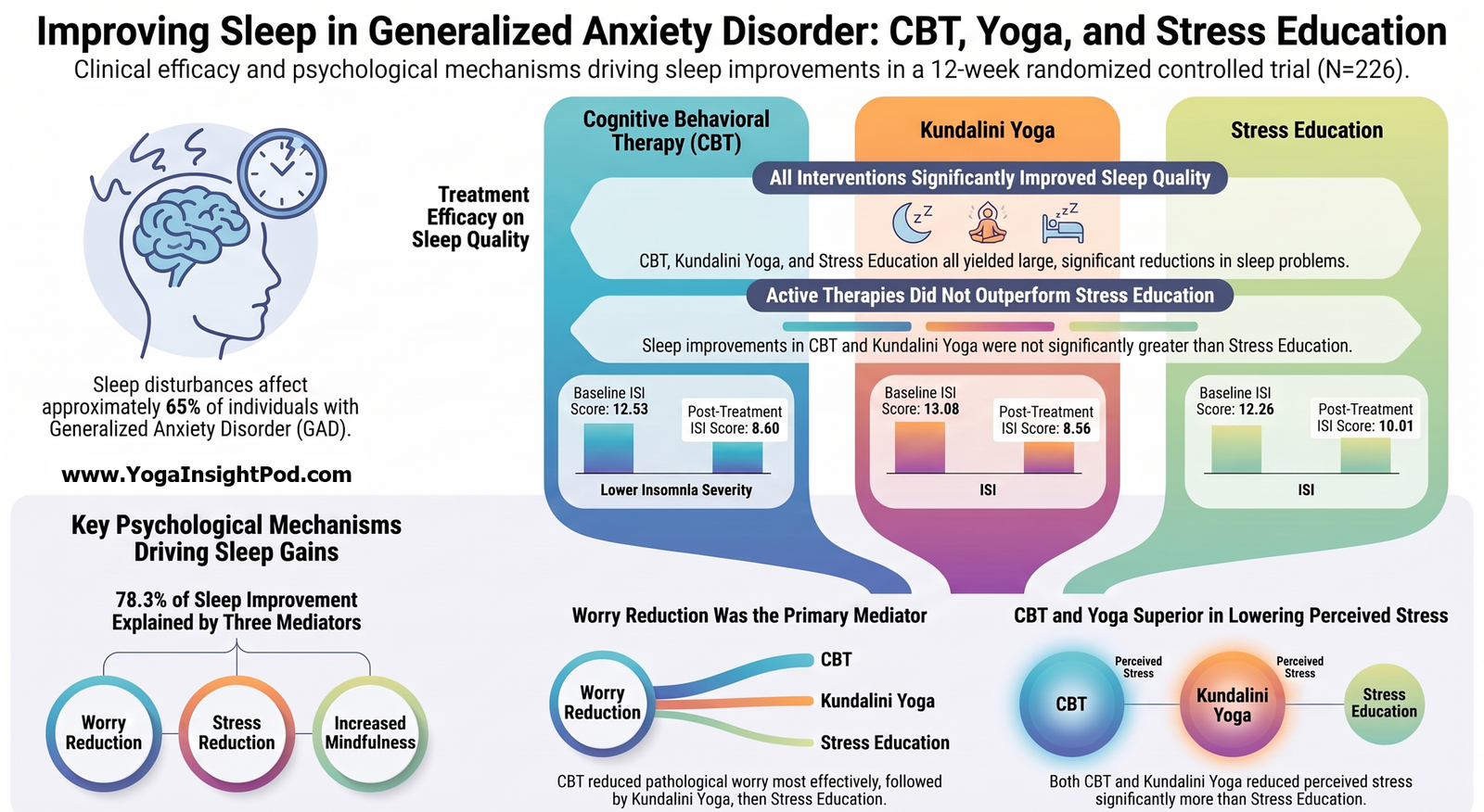
Can practicing Kundalini Yoga improve sleep quality and reduce stress? A randomized controlled trial by Ryan J. Jacoby and colleagues from Massachusetts General Hospital/Harvard Medical School, the University of Louisville, Suffolk University, Southern Methodist University, Normandie University, Georgetown University Medical Center, Brigham and Women’s Hospital/Harvard Medical School, Philipps University Marburg, and New York University Grossman School of Medicine investigated how Kundalini Yoga, mindfulness, reduced worry, and perceived stress relate to improvements in sleep quality over 12 weeks among 226 adults.
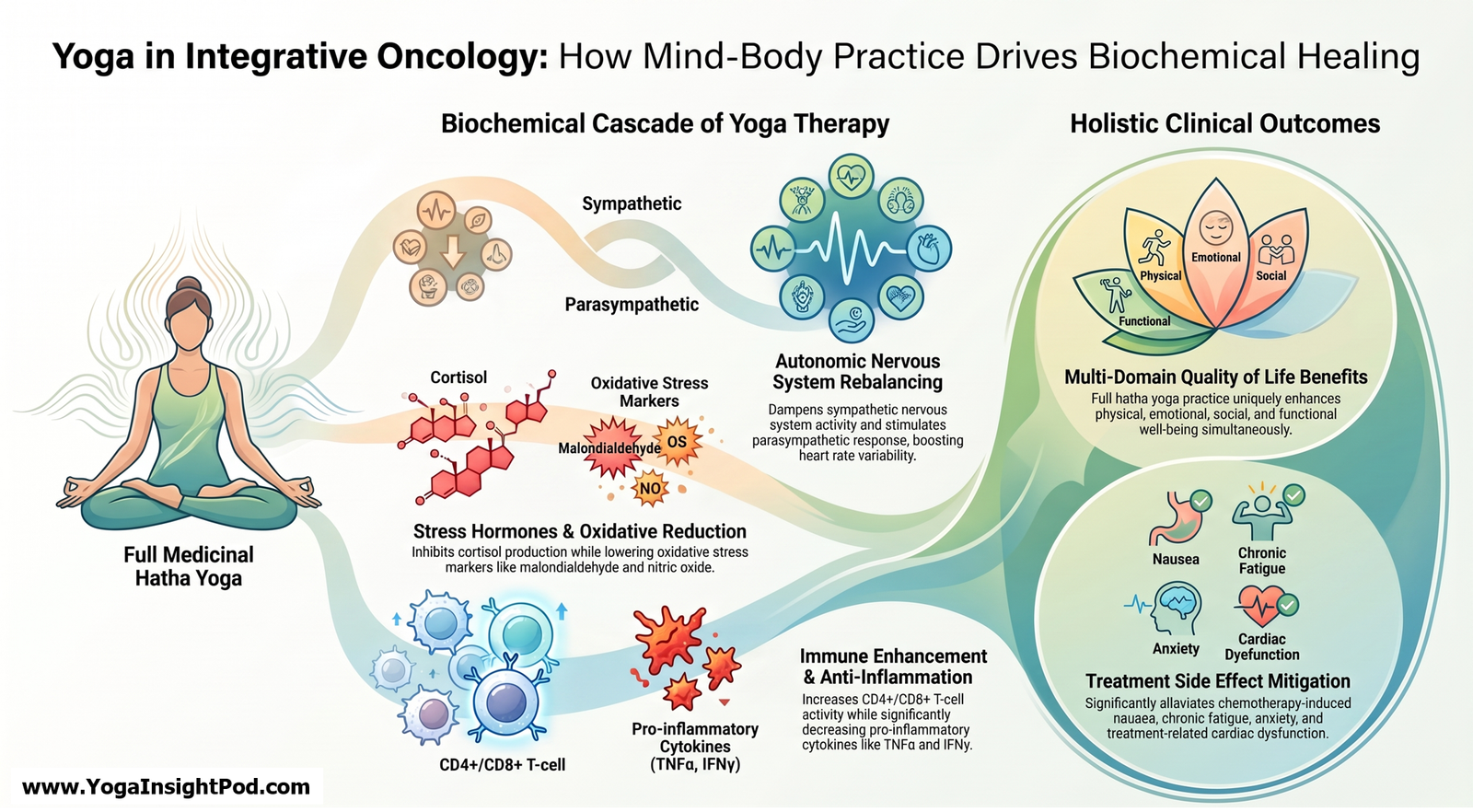
A 2024 narrative review by Stéphanie Blockhuys and Pernilla Wittung-Stafshede from the University of Gothenburg and Chalmers University of Technology examines randomized clinical trials of yoga as a complementary therapy during cancer treatment. The evidence highlights the potential roles of yoga postures, pranayama, meditation, and relaxation in supporting physical and psychological well-being.