A 2025 scoping review maps the profound impact of long-term yoga practice (over one year) on the human system. It provides a comprehensive evidence map showing significant qualitative and quantitative improvements in neural connectivity, cognitive function, and psychological resilience compared to short-term interventions.
Long-term yoga is not just “more of the same” this scoping review shows it can gradually reshape the brain, body and mind in distinctive ways that short programs may miss.
What the review did
Researchers analyzed 65 studies of adults with at least one year of yoga-based practice, covering postures, breathing techniques and meditation. They mapped how long-term yoga affects neural, cognitive, psychological and physiological outcomes, highlighting both what is known and where evidence is still thin.
Key findings on long-term practice
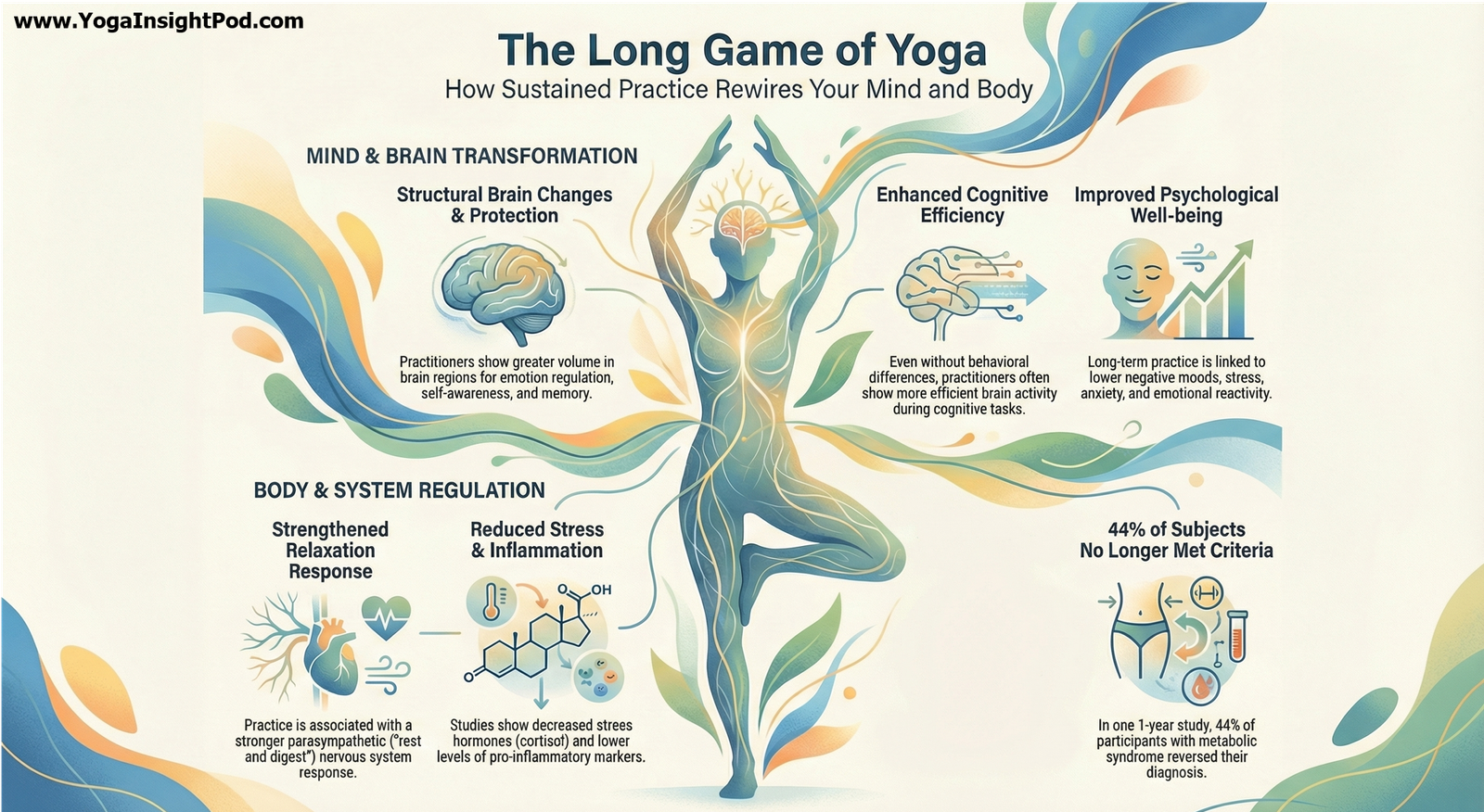
• Brain and cognition: Long-term practitioners often show structural and functional brain changes in regions tied to attention, interoception, emotion regulation and executive function, along with more efficient neural activity during tasks. Older adults, in particular, may gain memory and cognitive benefits from sustained yoga practice.
• Body and physiology: Many studies link long-term yoga to stronger parasympathetic (“rest and digest”) activity, healthier hormonal and immune profiles and more efficient cardiovascular responses, though some techniques produce mixed or even sympathetic-leaning patterns.
• Mood and mental health: Over time, practitioners tend to report less negative affect, stress, anxiety and depressive symptoms, plus lower emotional reactivity and greater mental quietness.
Why it matters
Most yoga research still looks at short interventions of a few weeks or months, but this review argues that deeper neurophysiological and psychological adaptations likely unfold over years. For scientists and clinicians, long-term yoga is a rich model of how embodied practices can train self-regulation; for practitioners, it reinforces the value of steady, sustained practice rather than quick fixes.