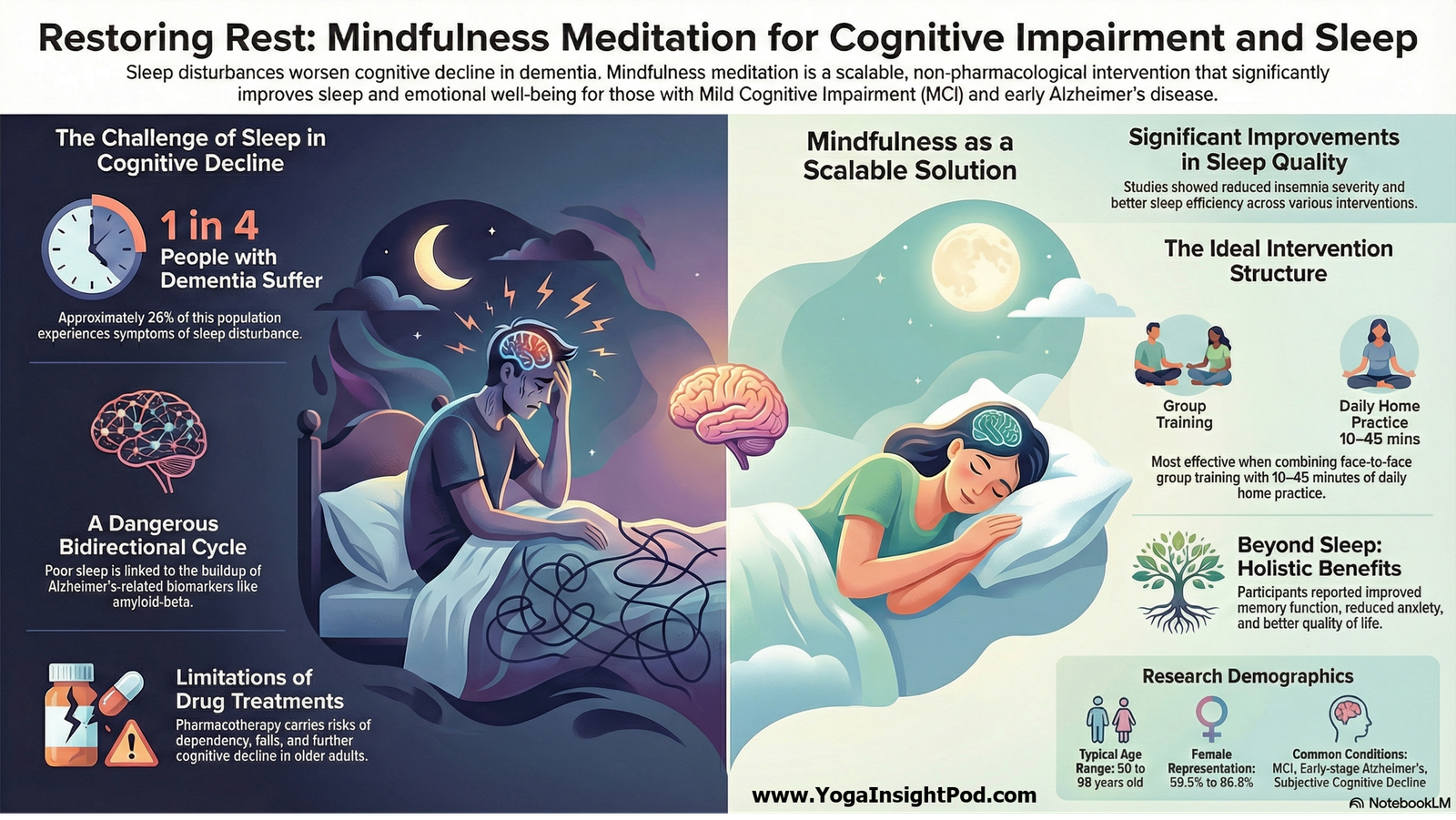
Research shows that structured mindfulness meditation programs can meaningfully improve sleep quality, reduce insomnia and ease fatigue in older adults with mild cognitive impairment or early Alzheimer’s disease. While more rigorous trials are needed, the findings suggest mindfulness is a low-cost, scalable tool that benefits both sleep and overall well-being in this vulnerable group.
Mindfulness meditation is often framed as a way to “calm the mind,” but research shows it may also become a practical, low cost tool to soothe disturbed sleep in people already struggling with memory and thinking problems. The authors sifted through two decades of research and distilled seven clinical studies involving older adults with subjective cognitive decline, mild cognitive impairment or early Alzheimer’s disease, all of whom received structured mindfulness based programs, usually in small groups with guided sessions and simple daily home practice.
Across these studies, a consistent pattern emerges: participants who engaged in mindfulness practices ranging from Kirtan Kriya meditation with mantra, mudra and visualization, to more conventional mindfulness based interventions with breath awareness, body scans and gentle movement reported better sleep quality, milder insomnia and less fatigue than at baseline, with some trials also showing reductions in nighttime behaviors and daytime napping. In several cases, sleep gains came alongside improvements in mood, stress, anxiety, perceived memory and quality of life, and in one exploratory trial, changes in a blood biomarker linked to Alzheimer’s pathology hinted at a possible biological bridge between better sleep and brain health. At the same time, the review is careful not to overpromise, most studies had small samples, short follow up and heavy reliance on self reported sleep, and mindfulness sessions had to be adapted or shortened for those with more severe dementia, where standard protocols proved hard to follow.