Explore the science of Yoga Nidra, a guided yogic sleep practice shown to support stress reduction, brain function, sleep quality, and overall well-being.
Yoga Nidra: The Science of Yogic Sleep and Deep Relaxation
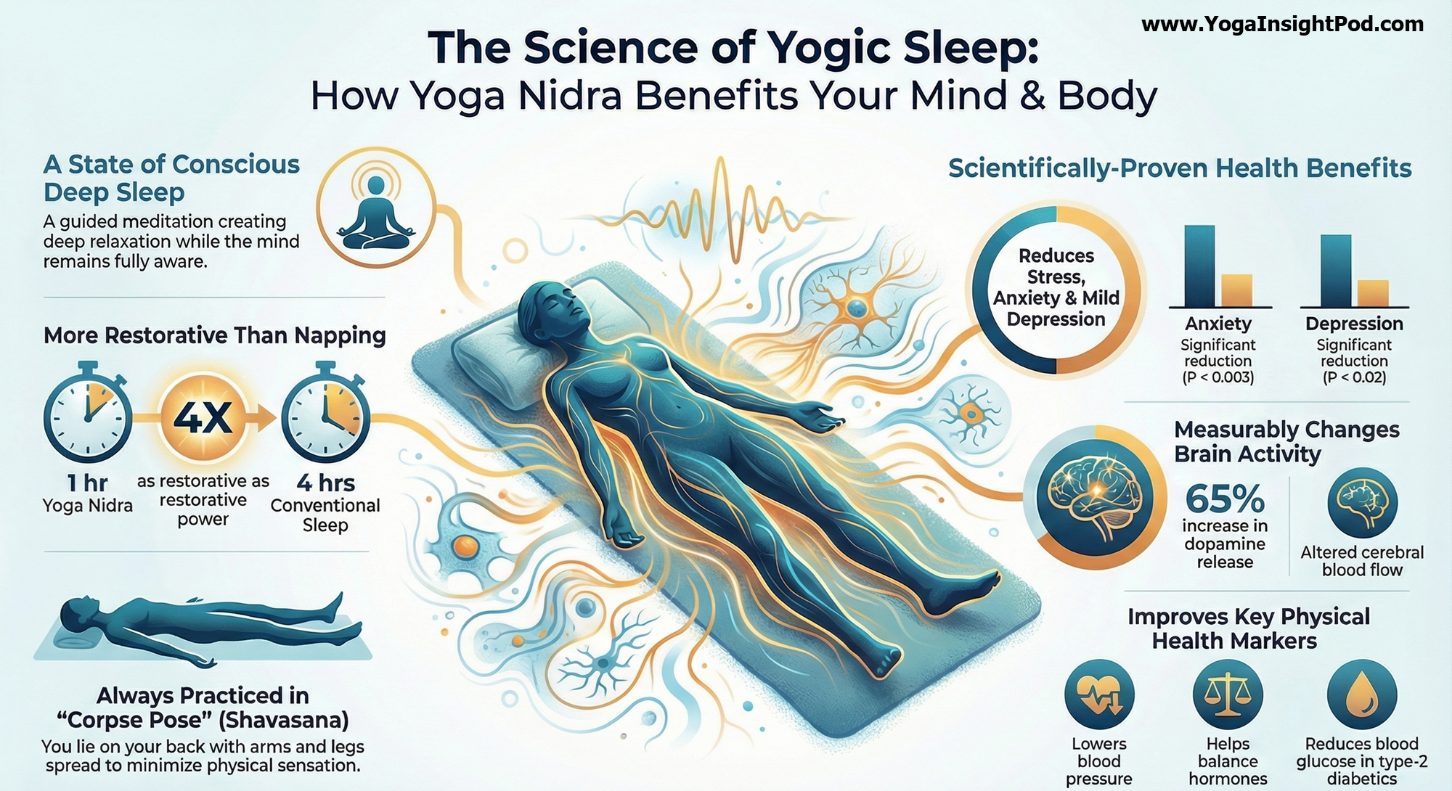
Yoga Nidra, commonly known as yogic sleep, is a guided meditation practice that induces a state of deep relaxation while maintaining conscious awareness. Although the body appears to be asleep, the practitioner remains mentally alert. Scientific research describes Yoga Nidra as a distinct state of consciousness occurring between waking and sleeping, different from both ordinary sleep and traditional seated meditation. This unique state of aware relaxation has been documented in both ancient yogic texts and modern clinical studies, highlighting Yoga Nidra’s relevance for mental, neurological, and physiological well-being.
Ancient Roots of Yoga Nidra
Yoga Nidra originates from ancient Indian spiritual traditions and is referenced in classical texts such as the Upanishads, the Mandukya Upanishad, the Vijñāna Bhairava Tantra, and the Mahabharata. These sources describe a state beyond waking, dreaming, and deep sleep one in which consciousness remains present despite withdrawal from sensory experience. In the twentieth century, Yoga Nidra was systematically presented to the public by Swami Satyananda Saraswati. Unlike yogic practices that emphasize effort, concentration, or physical exertion, Yoga Nidra emphasizes complete relaxation, making it accessible to individuals of all ages and physical abilities.
How Yoga Nidra Is Practiced
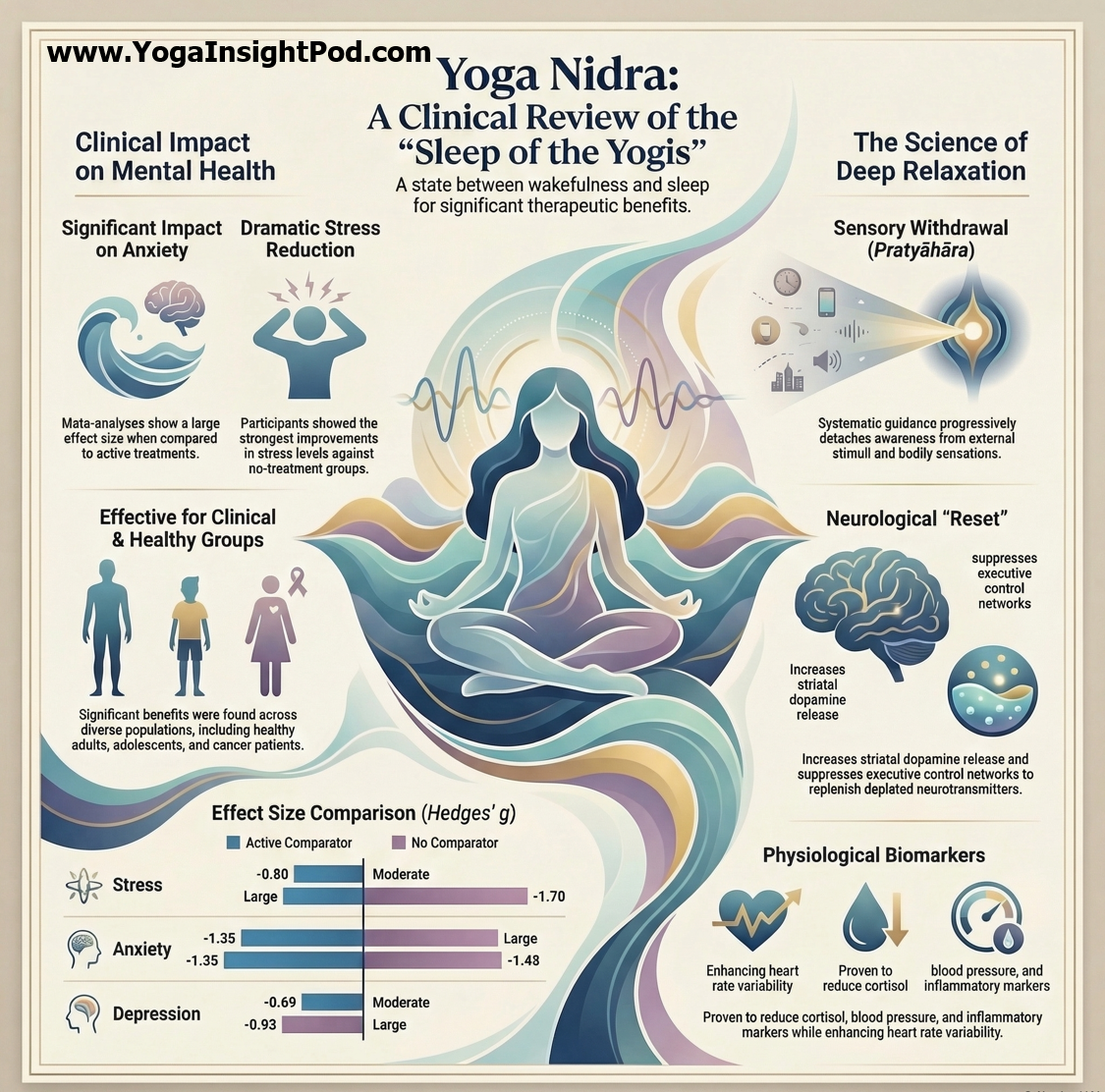
Yoga Nidra is practiced lying down in Shavasana (corpse pose). The practice follows a structured sequence that includes preparation, formulation of a personal intention (Sankalpa), systematic rotation of awareness through the body, awareness of natural breathing, recall of contrasting sensations, guided visualization, repetition of the intention, and a gradual return to waking awareness. From a yogic perspective, Yoga Nidra is classified as a pratyahara practice withdrawal of the senses. During this process, mental activity disengages from sensory input, leading to deep relaxation and reduced sympathetic nervous system activity, while awareness remains intact.
Stress, Anxiety, and Emotional Well-Being
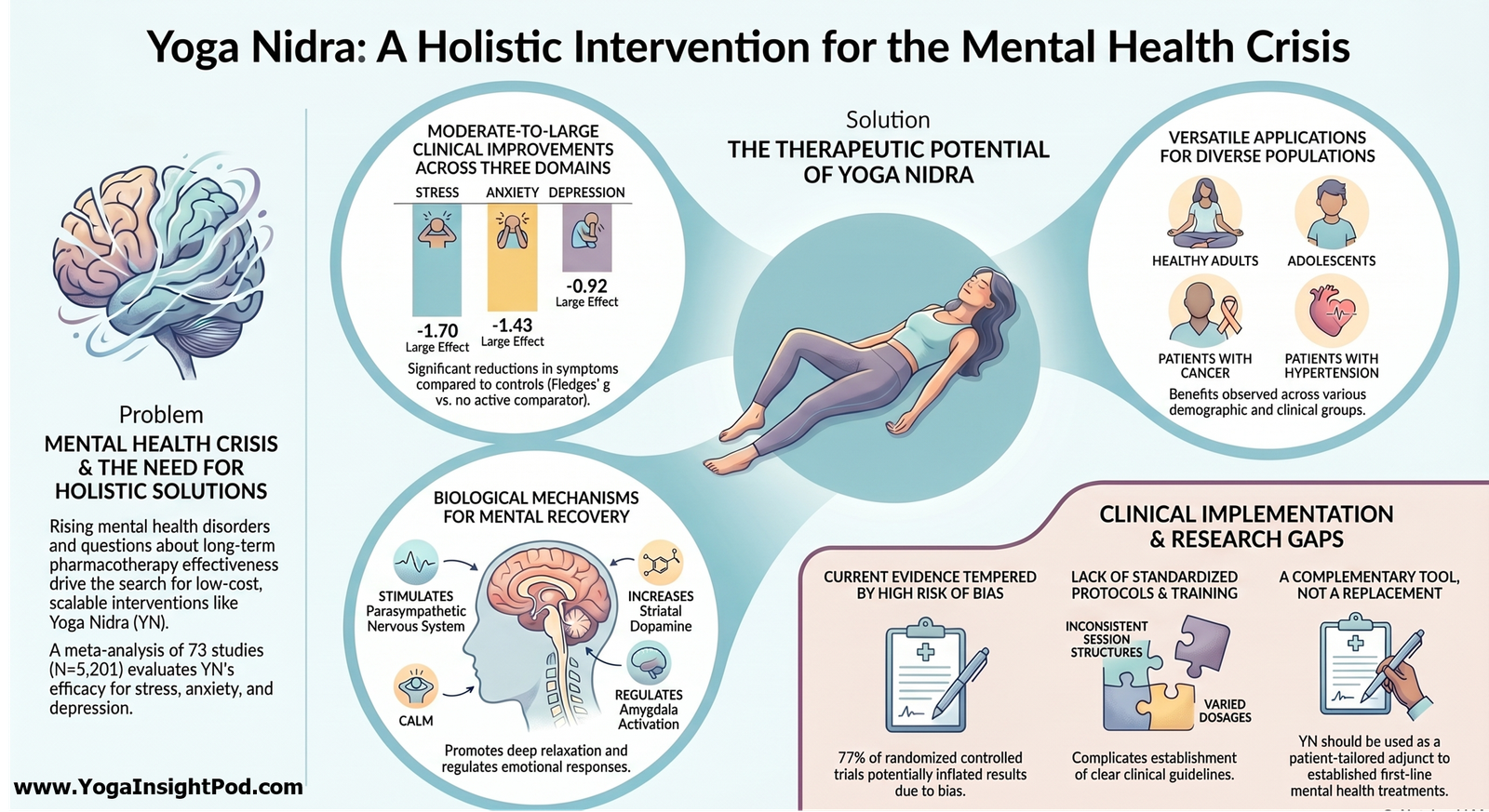
Clinical studies reviewed in the scientific literature show that Yoga Nidra has been widely used to manage stress and stress-related conditions. Randomized controlled trials have reported significant reductions in anxiety and depression scores following regular Yoga Nidra practice, along with improvements in positive well-being, vitality, and general health measures. Studies conducted among students and healthcare trainees also demonstrated significant reductions in perceived stress levels. Importantly, the evidence indicates that Yoga Nidra is beneficial for mild to moderate anxiety and depression, while its effects were not significant in cases of severe anxiety or severe depression.
Effects on Brain Activity and the Nervous System
Neurophysiological research provides objective evidence that Yoga Nidra alters brain function. EEG studies have shown increases in alpha and theta brain wave activity, which are commonly associated with relaxation and meditative states. Brain imaging studies using positron emission tomography (PET) demonstrated increased endogenous dopamine release during Yoga Nidra practice, along with distinct patterns of cerebral blood flow compared to normal waking consciousness. These findings confirm that Yoga Nidra produces measurable changes in central nervous system activity.
Cardiovascular, Hormonal, and Metabolic Effects
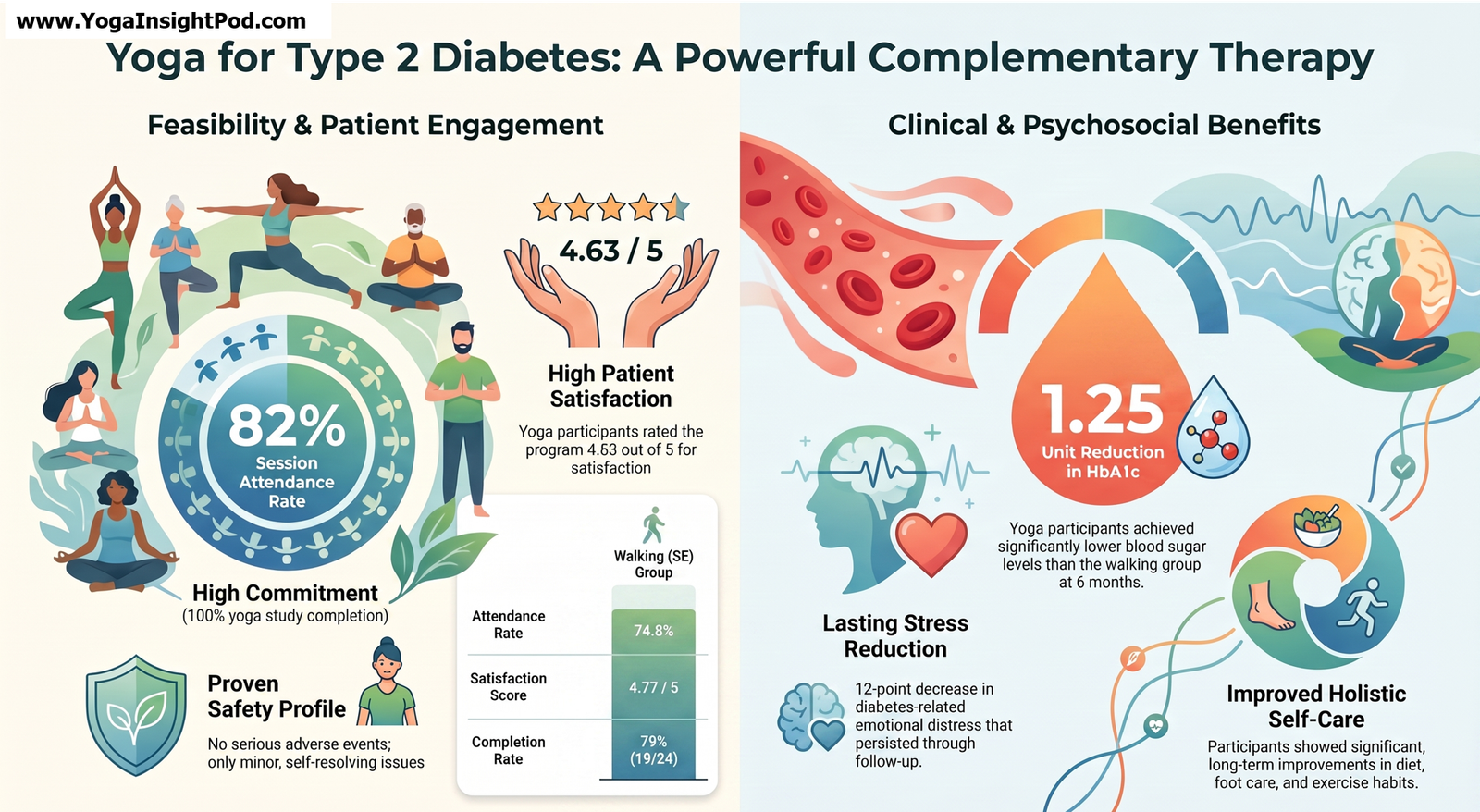
Research has shown that Yoga Nidra practice is associated with improvements in several physiological parameters. Studies involving individuals with hypertension reported significant reductions in systolic and diastolic blood pressure, pulse rate, respiration rate, and stress-related psychological measures. In women with menstrual disorders, Yoga Nidra practice was associated with improvements in hormonal balance, including reductions in prolactin, thyroid-stimulating hormone, follicle-stimulating hormone, and luteinizing hormone. Additional studies reported improved blood glucose regulation in individuals with type 2 diabetes when Yoga Nidra was practiced alongside standard medical treatment.
Sleep, Pain, and Clinical Applications
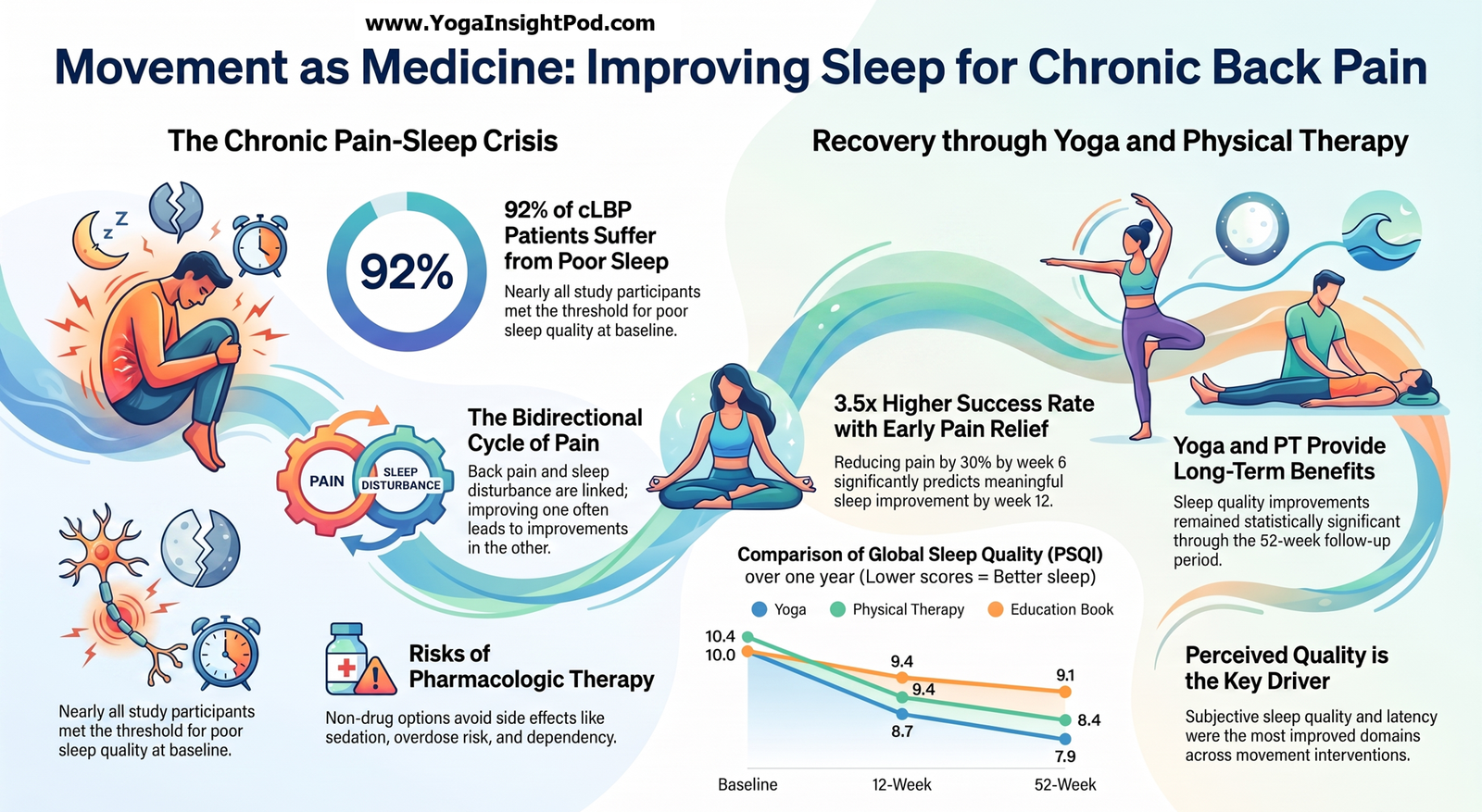
Yoga Nidra has also been examined for its effects on sleep and pain perception. Clinical trials reported improvements in sleep architecture and reductions in cortisol levels among individuals with chronic insomnia. Other studies demonstrated reduced pain perception and improved patient satisfaction during medical procedures when Yoga Nidra was used as a relaxation intervention. These findings suggest that Yoga Nidra supports both physical comfort and emotional regulation in clinical and therapeutic contexts.
What the Scientific Evidence Shows
Overall, the scientific evidence indicates that Yoga Nidra produces consistent psychological and physiological effects, including stress reduction, autonomic nervous system regulation, and measurable changes in brain activity. At the same time, researchers emphasize the need for further rigorous studies, as some existing research has limitations related to sample size, methodology, and protocol variability.
Conclusion
Yoga Nidra is a guided relaxation practice rooted in ancient yogic traditions and increasingly supported by modern scientific research. The available evidence demonstrates that Yoga Nidra induces a distinct state of conscious relaxation with measurable effects on mental health, brain function, cardiovascular regulation, hormonal balance, and sleep quality. When practiced correctly and systematically, Yoga Nidra offers a structured approach to deep rest that is neither ordinary sleep nor conventional meditation, but a unique state of aware relaxation.