A randomized clinical trial found that a 12-week virtual yoga program significantly reduced chronic low back pain, improved daily function, and lowered pain medication use, with benefits lasting beyond the program period.
Virtual Yoga and Chronic Low Back Pain: What Does the Research Show?
Chronic low back pain is one of the most common causes of long-term discomfort, disability, and reduced quality of life worldwide. Many people living with persistent back pain rely on medications, injections, or repeated clinical visits often with mixed results. Clinical guidelines increasingly recommend non-drug approaches, such as yoga, as first-line treatments. Yet access to in-person yoga programs remains limited for many individuals.
A large randomized clinical trial published in JAMA Network Open examined whether live, virtual yoga classes could safely and effectively reduce chronic low back pain and improve daily functioning. The findings provide important insights for people seeking accessible, evidence-based options for managing back pain.
Why Study Virtual Yoga for Back Pain?
Low back pain affects more than half of adults at some point in their lives and is a leading cause of work disability and healthcare spending. Despite widespread use of medications, injections, and even surgery, many individuals continue to experience pain and functional limitations. Clinical guidelines recommend starting with non-pharmacological treatments, including yoga and physical therapy. However, barriers such as travel, scheduling, cost, mobility limitations, and discomfort practicing in public settings often prevent people from accessing in-person yoga classes. Virtual delivery may help overcome these barriers, but until recently, strong clinical evidence was limited.
How the Study Was Conducted
Researchers enrolled 140 adults aged 18–64 with chronic low back pain lasting at least 12 weeks. Participants reported moderate pain and functional impairment at baseline.
They were randomly assigned to one of two groups:
• Virtual Yoga Group (“Yoga Now”)
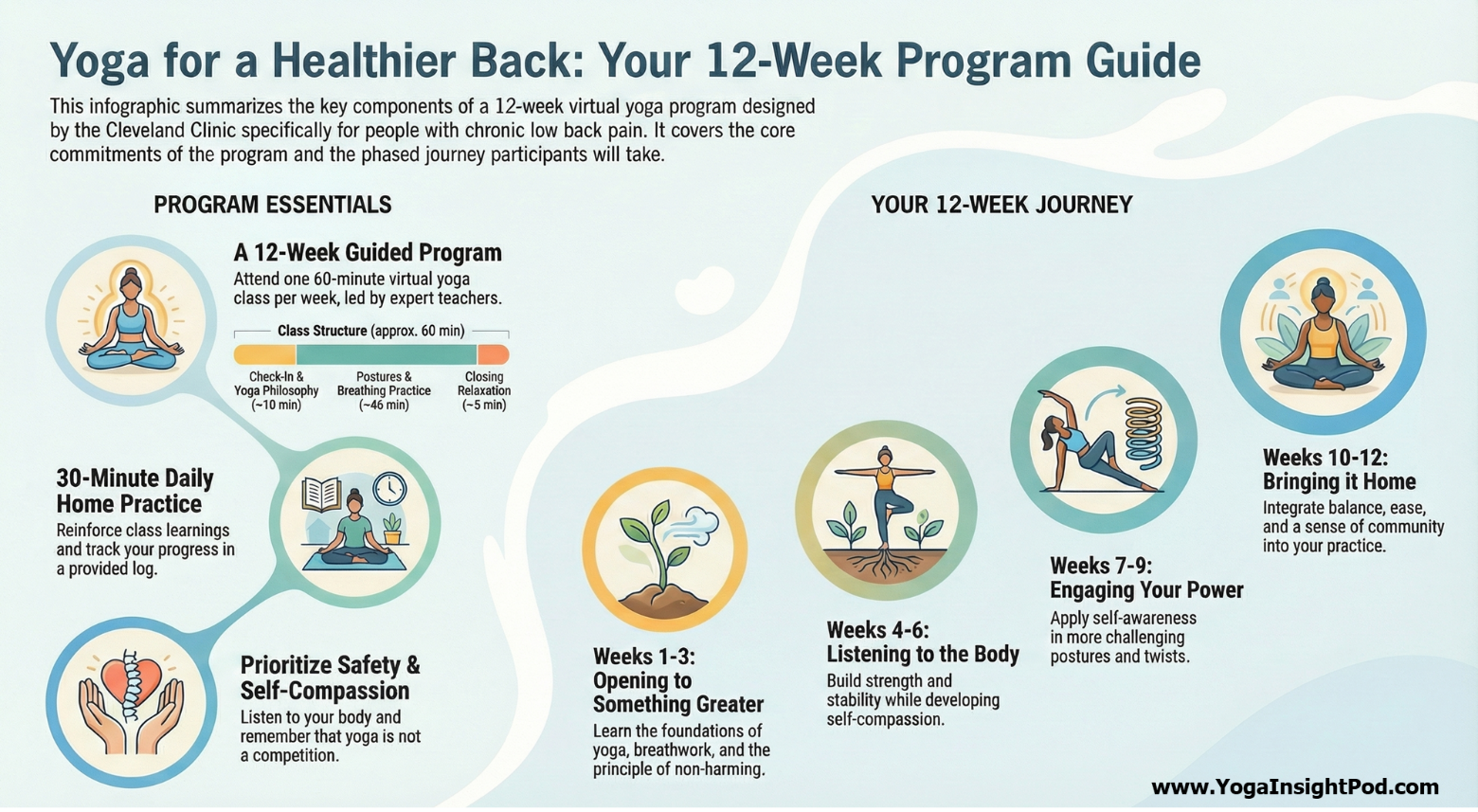
Twelve weekly, 60-minute, live-streamed therapeutic hatha yoga classes designed specifically for people with chronic low back pain.
• Wait-List Control Group (“Yoga Later”)
Continued usual care during the study and were offered yoga classes after completion.
Pain intensity, back-related function, sleep quality, and pain medication use were measured at 6, 12, and 24 weeks.
What Did the Study Find?
1. Meaningful Reduction in Back Pain
Participants in the virtual yoga group experienced significantly greater reductions in pain intensity compared with the wait-list group. Improvements were already noticeable by 6 weeks and continued through 12 weeks. Importantly, pain reductions were maintained at 24 weeks, even after the formal intervention ended.
2. Improved Daily Function
Beyond pain relief, participants practicing virtual yoga showed greater improvements in back-related function, meaning they were better able to perform daily activities such as walking, bending, and household tasks. Functional improvements were clinically meaningful and sustained over time.
3. Reduced Use of Pain Medications
At both 12 and 24 weeks, participants in the yoga group were significantly less likely to use pain medications, particularly nonsteroidal anti-inflammatory drugs (NSAIDs), compared with the control group. This finding is notable given concerns about long-term medication use for chronic pain.
4. Better Sleep Quality
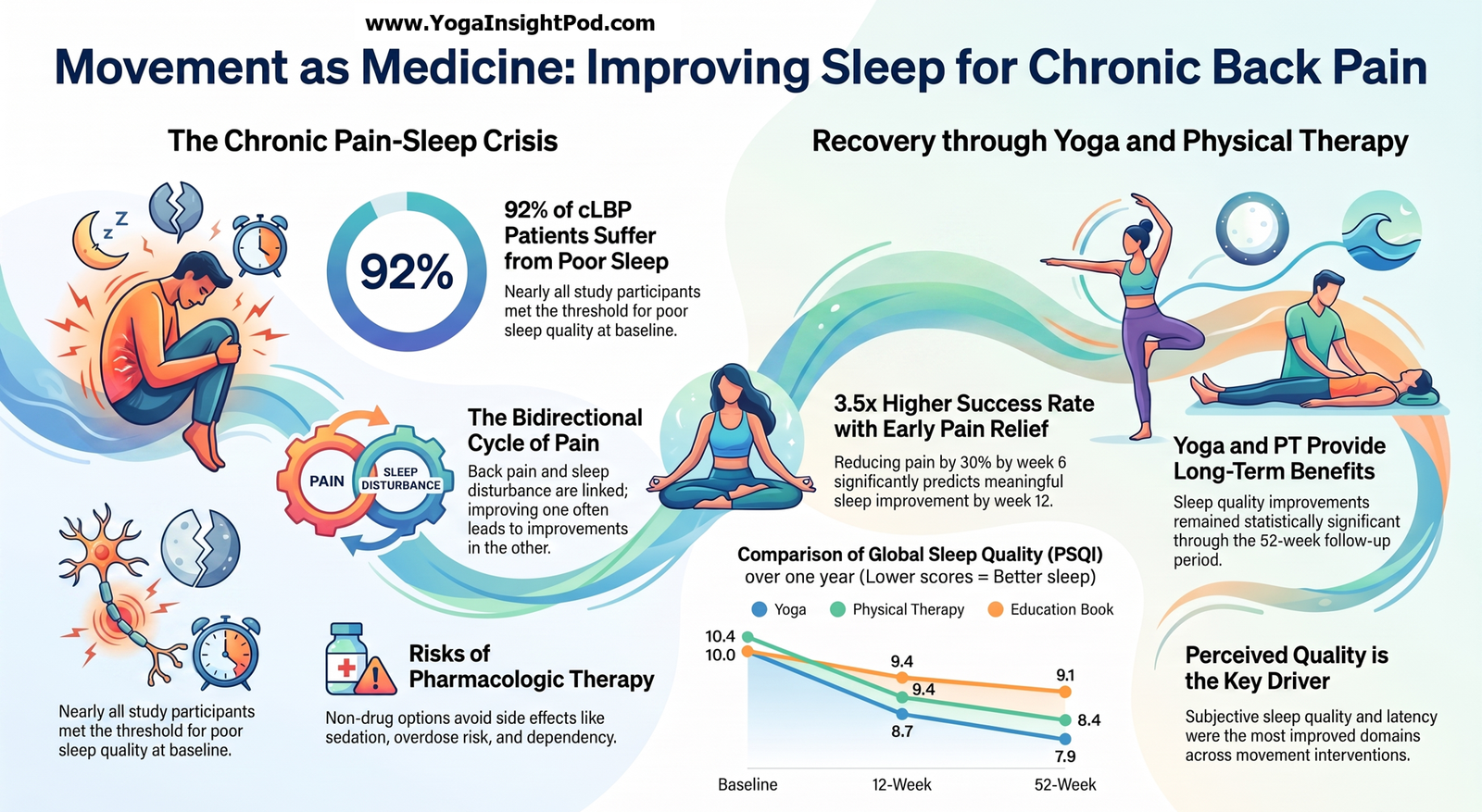
Sleep disturbances are common in people with chronic pain. The study found that participants in the virtual yoga group reported greater improvements in sleep quality, which persisted at follow-up assessments.
5. Safety and Feasibility
Adverse events were uncommon and mild, with only a few participants reporting temporary increases in back discomfort. No serious adverse events were attributed to yoga. The structured, therapist-designed program included posture modifications and props, emphasizing safety for people with chronic back pain.
What Makes This Study Important?
This trial demonstrates that virtual yoga can be both safe and effective for managing chronic low back pain. The results were comparable to prior studies of in-person yoga, suggesting that benefits translate well to an online format.
Virtual delivery also offers key advantages:
• Increased accessibility
• Reduced travel and scheduling barriers
• Privacy and comfort for participants
• Continued benefit even with moderate class attendance, supported by home practice resources
These findings support expanding access to evidence-based, non-drug pain management options through digital platforms.
What the Study Does Not Claim
The authors emphasize that yoga is not a cure and should be considered part of a broader pain-management approach. While results are encouraging, longer-term studies and more diverse participant populations are still needed.
Takeaway for People Living With Back Pain
For individuals with chronic low back pain who face barriers to in-person care, this study provides strong clinical evidence that therapeutic virtual yoga can reduce pain, improve function, support better sleep, and decrease reliance on pain medications, with minimal risk.