A 2024 narrative review by Stéphanie Blockhuys and Pernilla Wittung-Stafshede from the University of Gothenburg and Chalmers University of Technology examines randomized clinical trials of yoga as a complementary therapy during cancer treatment. The evidence highlights the potential roles of yoga postures, pranayama, meditation, and relaxation in supporting physical and psychological well-being.
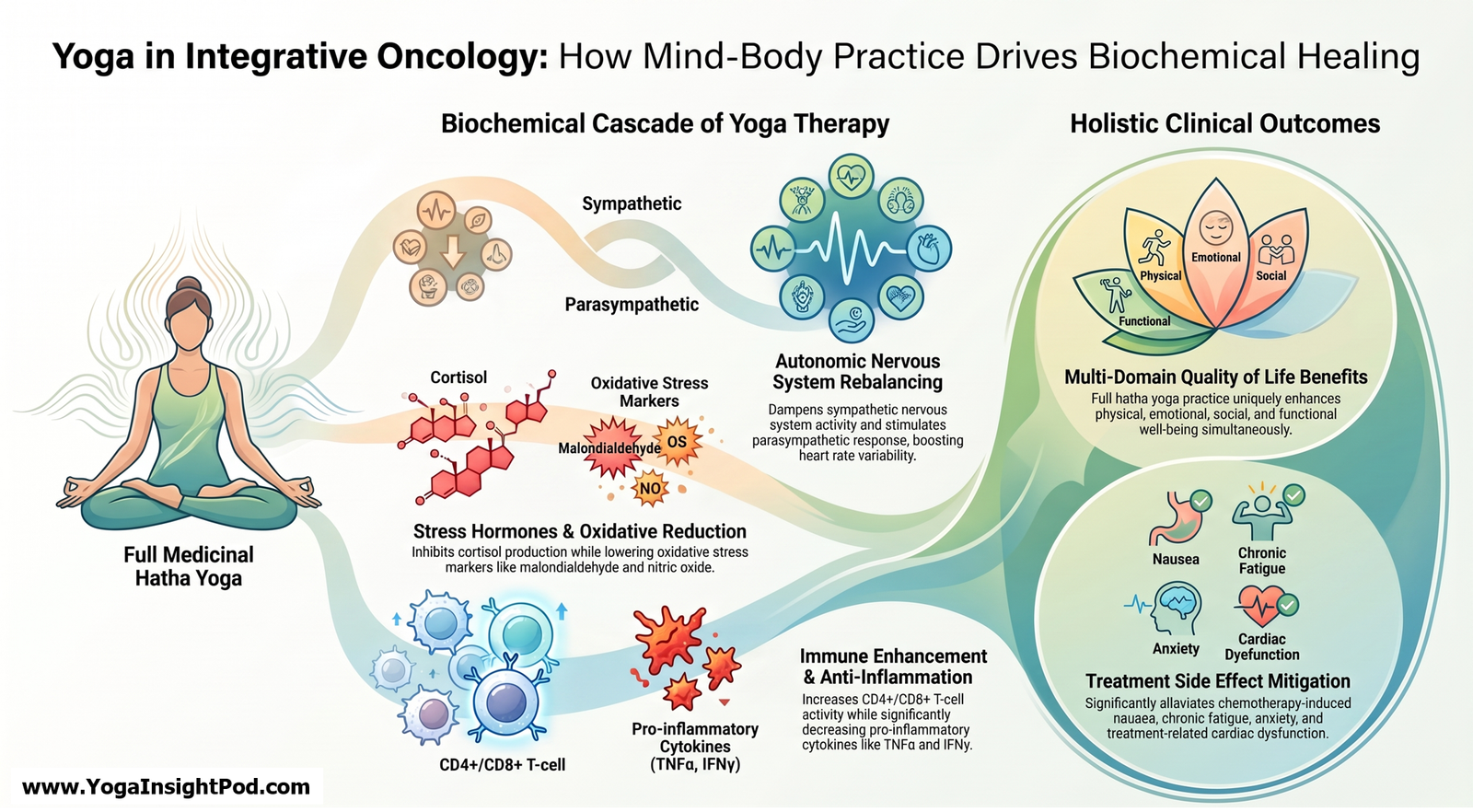
Yoga may offer much more than flexibility and relaxation for people undergoing cancer treatment. A 2024 review by Stéphanie Blockhuys and Pernilla Wittung-Stafshede examined randomized clinical trials of medicinal hatha yoga, which combines yogic postures, breathing practices, meditation, and relaxation. Across the studies reviewed, yoga was associated with improvements in several aspects of quality of life and with reductions in symptoms including stress, anxiety, fatigue, sleep disturbance, pain, and treatment-related discomfort.
Breathing appears particularly interesting. Studies of pranayama included practices such as Nadi Shodhana, Bhramari, Ujjayi, Sheetali, and breath observation. Individual trials reported improvements in anxiety, sleep disturbance, fatigue, mental quality of life, and antioxidant defenses.
The full yoga practice may offer something that its individual components do not. The review suggests that yogic postures may be particularly relevant to physical well-being, while breathing, meditation, and relaxation contribute to psychological and physiological regulation.
Researchers also observed changes involving heart-rate variability, cortisol, oxidative stress, immune function, and inflammatory markers, suggesting possible biological pathways linking yoga with stress regulation and well-being. Importantly, yoga should be viewed as complementary therapy, not cancer treatment. The review states that evidence does not yet show that yoga directly changes cancer pathophysiology, tumor response, or survival, and calls for larger, better-controlled studies.