Can practicing Kundalini Yoga improve sleep quality and reduce stress? A randomized controlled trial by Ryan J. Jacoby and colleagues from Massachusetts General Hospital/Harvard Medical School, the University of Louisville, Suffolk University, Southern Methodist University, Normandie University, Georgetown University Medical Center, Brigham and Women’s Hospital/Harvard Medical School, Philipps University Marburg, and New York University Grossman School of Medicine investigated how Kundalini Yoga, mindfulness, reduced worry, and perceived stress relate to improvements in sleep quality over 12 weeks among 226 adults.
Can Yoga Help You Sleep Better?
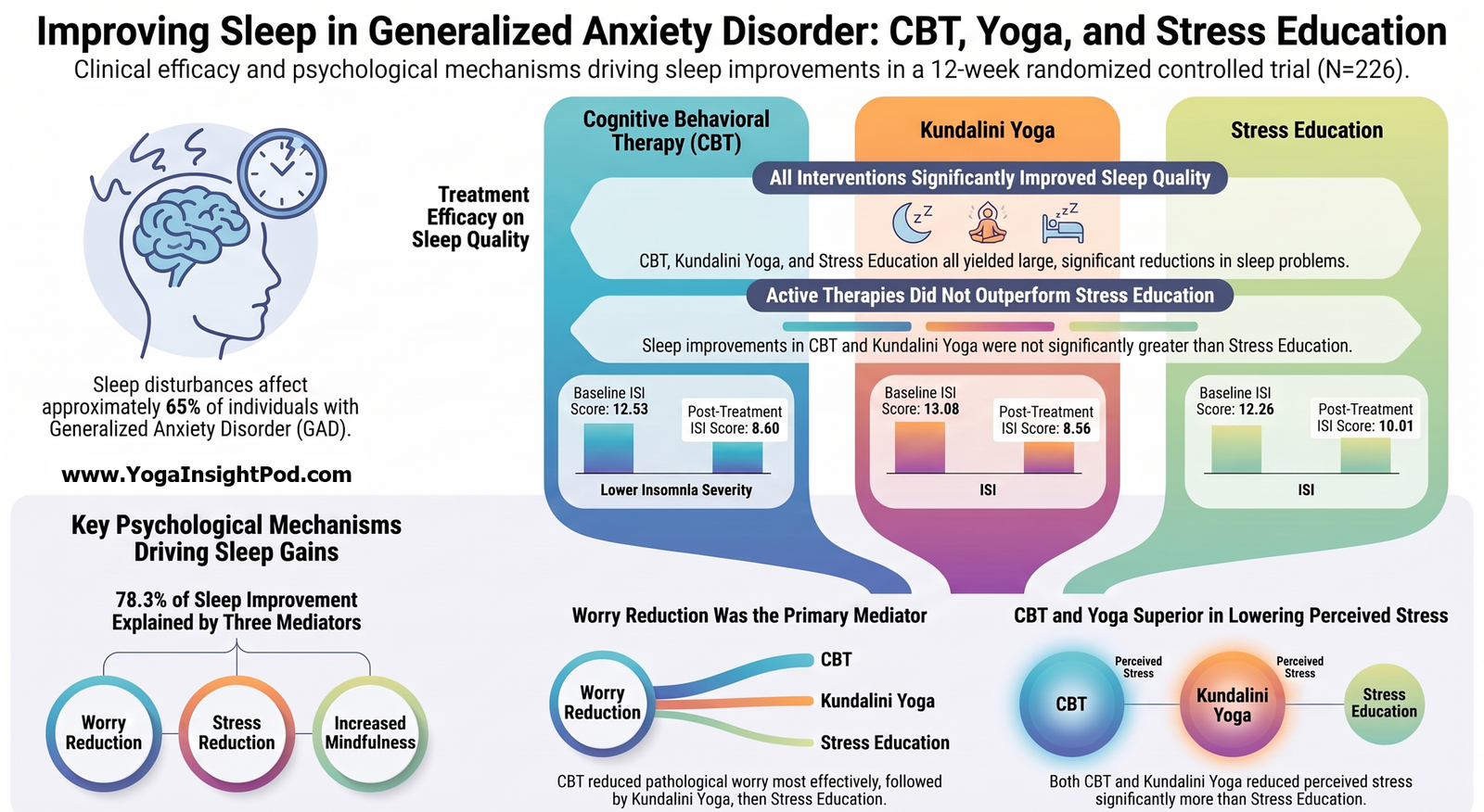
Getting quality sleep can be challenging when stress and persistent thoughts interfere with relaxation. Could yoga offer a practical way to improve sleep through breathing, meditation, and mindful movement? A study published in the Journal of Sleep Research by Ryan J. Jacoby and colleagues examined the effects of Kundalini Yoga, cognitive behavioral therapy (CBT), and stress education on sleep quality among 226 adults with generalized anxiety disorder.
What Did the Study Involve? Participants were randomly assigned to 12 weeks of Kundalini Yoga, CBT, or stress education. Each intervention included weekly 60-minute sessions and daily 20-minute home practices. The Kundalini Yoga program combined breathing techniques, physical postures, meditation, yoga philosophy, and deep relaxation.
What Did Researchers Discover? All three groups experienced significant improvements in sleep quality and insomnia symptoms. However, Kundalini Yoga and CBT did not significantly outperform stress education on overall sleep outcomes. Researchers also examined three factors associated with better sleep: Reduced worry, Increased mindfulness, Reduced perceived stress. Importantly, Kundalini Yoga produced greater reductions in perceived stress than stress education, and these changes were associated with improvements in sleep. Why Does This Matter? The findings suggest that Kundalini Yoga may be a useful mind-body approach for supporting sleep and stress management. However, the study did not establish that yoga was superior to other interventions or that changes in stress directly caused better sleep. The takeaway: Yoga's combination of breathing, meditation, movement, and relaxation may support better sleep as part of a broader wellness approach.