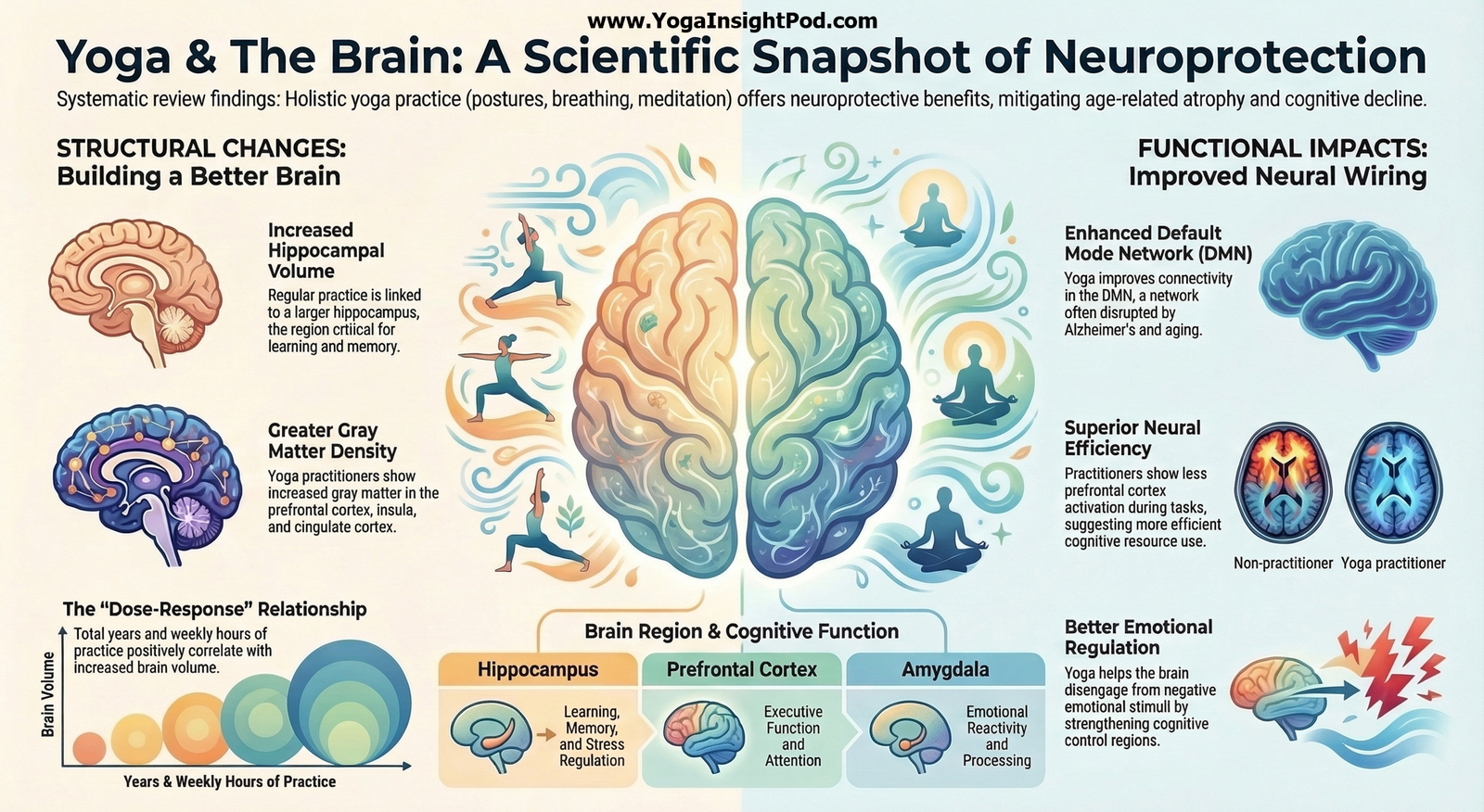
A systematic review of 11 neuroimaging studies by Neha P. Gothe from the University of Illinois at Urbana–Champaign and collaborators finds that regular yoga practice is associated with larger hippocampal and prefrontal regions, stronger default mode network connectivity, and more efficient emotion and attention networks. These changes suggest that yoga may help preserve brain health and cognitive function as we age.
A 2019 systematic review in the journal Brain Plasticity synthesizes 11 MRI, fMRI, and SPECT studies and concludes that regular yoga practice is associated with measurable changes in both brain structure and function. Across cross-sectional and intervention studies, yoga practitioners consistently show greater gray-matter volume or cortical thickness in key regions for memory, attention, and emotion regulation, including the hippocampus, prefrontal cortex, anterior cingulate, insula, and parts of the default mode network. These areas are among the most vulnerable to age-related atrophy and neurodegenerative disease, suggesting that yoga may confer neuroprotective benefits similar to aerobic exercise and mindfulness training.
Most included studies examined holistic yoga styles (mostly Hatha, plus some Kundalini and Iyengar) that combined postures, breathwork, and meditation, practiced at least weekly for several years or in structured 10–24 week programs. Long-term practitioners not only had larger hippocampal and frontal regions, but some studies also showed dose response effects: more years or hours of practice correlated with greater gray-matter volume in the hippocampus, insula, precuneus/posterior cingulate, and somatosensory cortex. Functional imaging work found that yoga is linked to more efficient dorsolateral prefrontal activation during working memory and emotional interference tasks, altered amygdala responses to negative stimuli, and stronger default-mode connectivity that tracks with better verbal memory in older adults with mild cognitive impairment.
While the evidence base is still small and heterogeneous, these converging findings support yoga as a low-impact, accessible strategy to support cognitive function and emotional regulation across adulthood, with particular promise for mitigating age-related decline. Well-powered randomized trials comparing yoga to aerobic exercise and standalone meditation are now needed to pinpoint which components and doses matter most for brain health.