NIH’s NCCIH “Yoga for Health” eBook explains who practices yoga, why, and what the current research says about benefits and risks for children, adults, older adults, and pregnant people. It offers practical safety tips and encourages using yoga as a complementary tool for whole-person health, not a replacement for medical care.
The National Institutes of Health’s National Center for Complementary and Integrative Health (NCCIH) has created a concise, evidence-informed guide, “Yoga for Health,” to help people use yoga wisely across the lifespan. The eBook explains yoga as a meditative movement practice that combines postures, breathwork, and meditation, and it summarizes what national surveys and clinical research currently show about who practices yoga, why they do it, and when it helps.
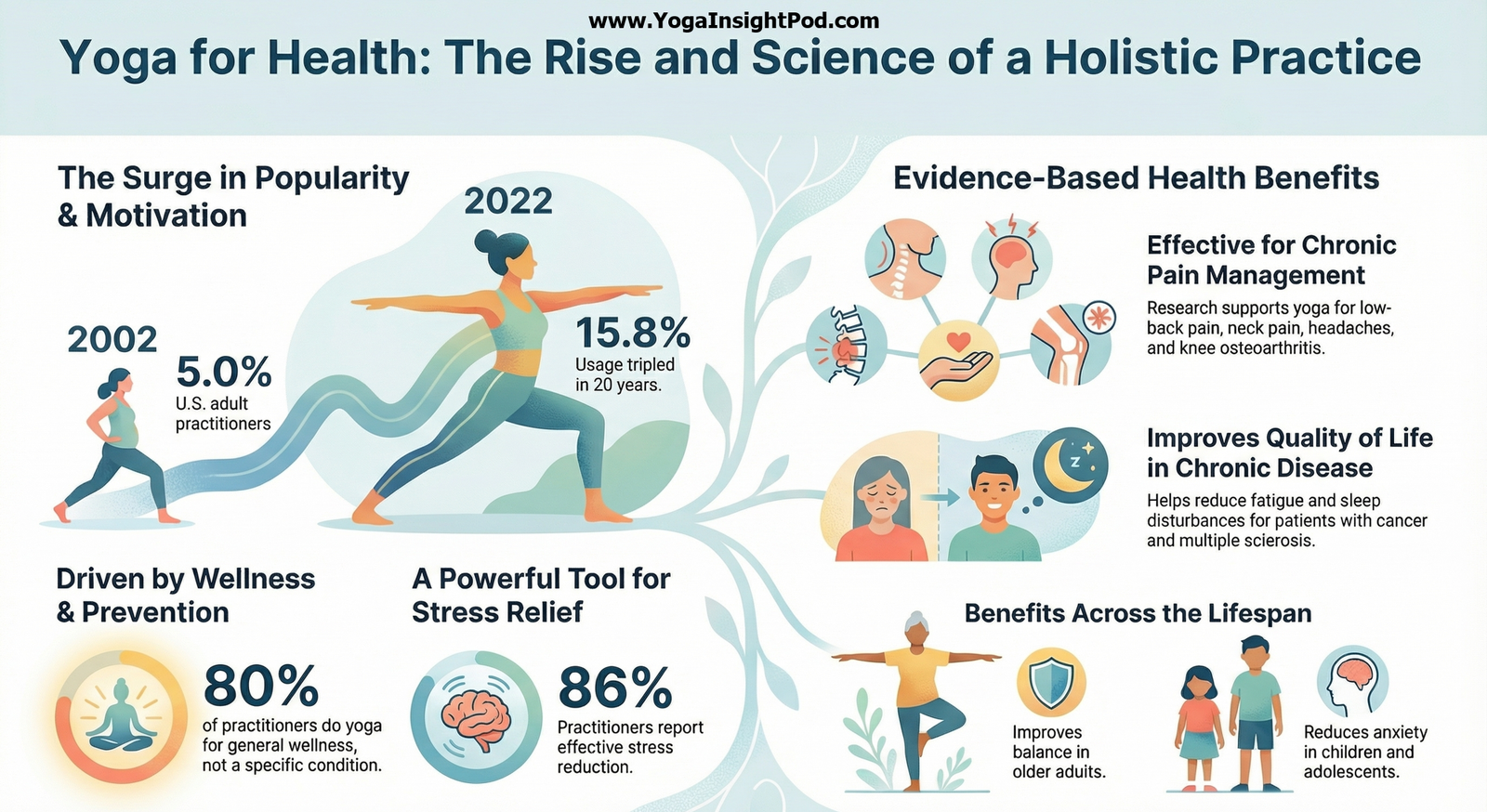
Survey data from the National Health Interview Survey show that adult yoga use in the United States more than tripled from 5 percent in 2002 to 15.8 percent in 2022, with most people citing general wellness, stress reduction, and whole-person benefits mind, body, and spirit rather than treatment of a specific condition. Many participants report better sleep, less stress, improved mood, healthier eating and activity habits, and greater motivation to exercise and cut back on smoking and alcohol.
The guide highlights growing evidence that yoga can support well-being and specific health needs in children, older adults, and people who are pregnant, while emphasizing the importance of medical guidance and appropriate class selection for these groups. It notes preliminary benefits for anxiety and mood in youth, balance and strength in older adults, and stress and pain reduction in pregnancy, but stresses that more rigorous research is needed. Safety is a core theme: yoga is generally safe when tailored to the individual and taught by a qualified instructor, but injuries mainly strains and sprains, especially in older adults and with hot yoga do occur, so gradual progression and clear communication with both health care providers and teachers are key.
Overall, NIH frames yoga as a complementary, not alternative, approach: a tool to support whole-person health alongside, not instead of, conventional care.