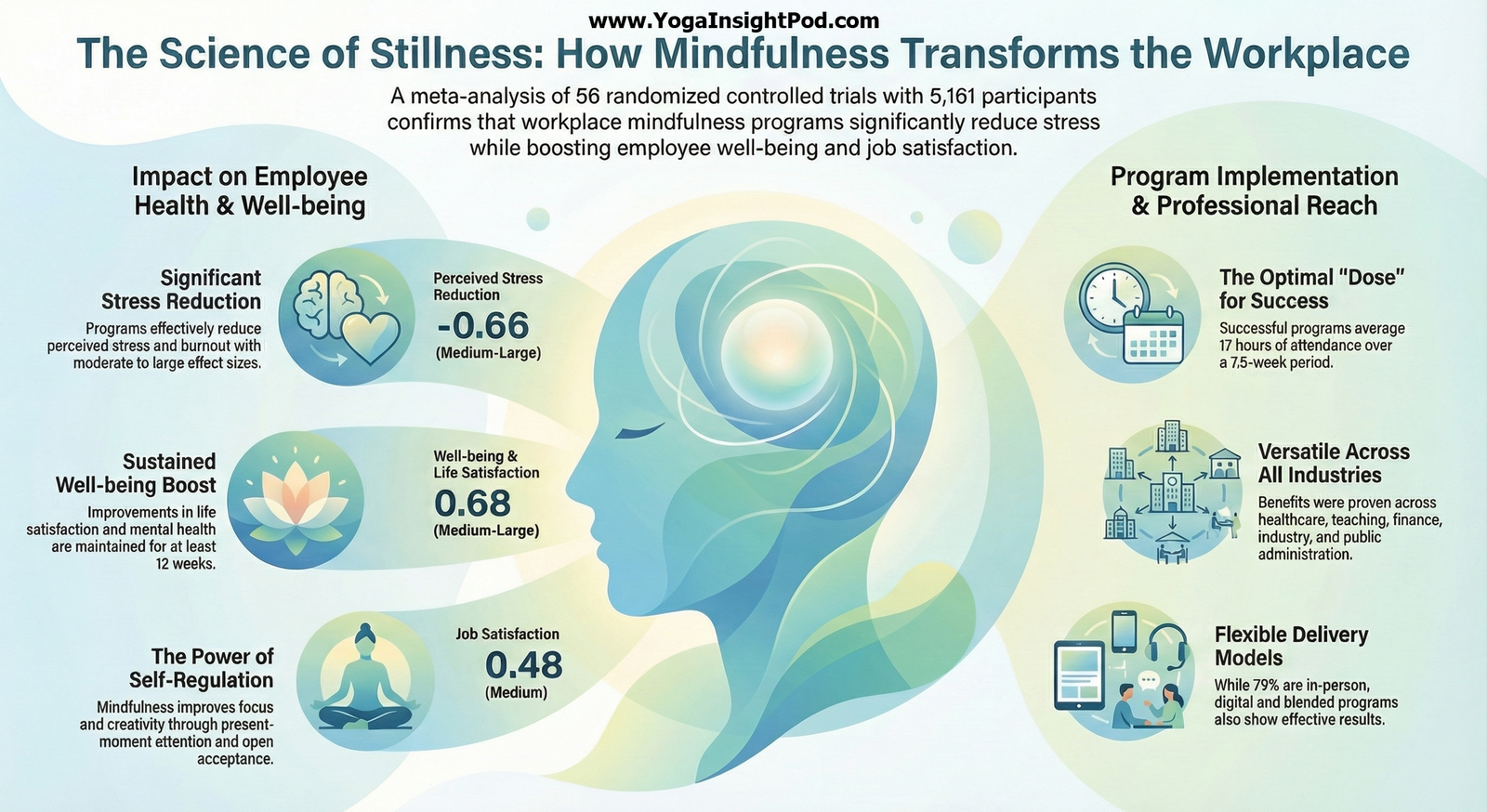
A 2020 meta-analysis of 56 workplace trials finds that mindfulness-based programs reliably reduce stress, burnout, and mental distress while increasing well-being, compassion, and job satisfaction across diverse occupations. Early data on engagement and productivity are encouraging but still emerging.
A 2020 meta-analysis of 56 randomized controlled trials (2,689 employees vs. 2,472 controls) shows that structured mindfulness-based programs (MBPs) can meaningfully improve employee mental health across a wide range of workplaces. Compared with control conditions, MBPs produced small to large effects (Hedges g ≈ 0.32–0.77) in reducing perceived stress, burnout, general psychological distress, and physical complaints, while boosting mindfulness, overall well-being, compassion, and job satisfaction. These gains generally persisted for at least 12 weeks after programs ended, indicating that the benefits are not just short-lived “training highs.”
The review covers classic 8-week MBSR-style courses, briefer adapted programs, and digital or blended formats delivered in hospitals, schools, call centers, corporate offices, and public-sector organizations. Despite substantial variation in length, delivery mode, and occupational group, positive effects on health and well-being were remarkably consistent, suggesting that the core ingredients regular practice of present-moment, nonjudgmental awareness matter more than any single branded curriculum. Evidence for direct work outcomes such as productivity and performance is still limited and mixed, largely because relatively few trials include robust objective metrics, but early signals on work engagement and resilience are promising.
For employers, the findings support offering mindfulness as a legitimate component of occupational health promotion rather than a wellness fad, especially in high-demand environments where stress, exhaustion, absenteeism, and presenteeism are major cost drivers. For employees, they underscore that even brief, well-designed programs on-site or online can provide concrete tools to manage pressure, regulate emotion, and sustain a healthier relationship with work. The authors call for next-generation trials that embed mindfulness into organizational culture and rigorously track long-term performance, not just personal well-being.