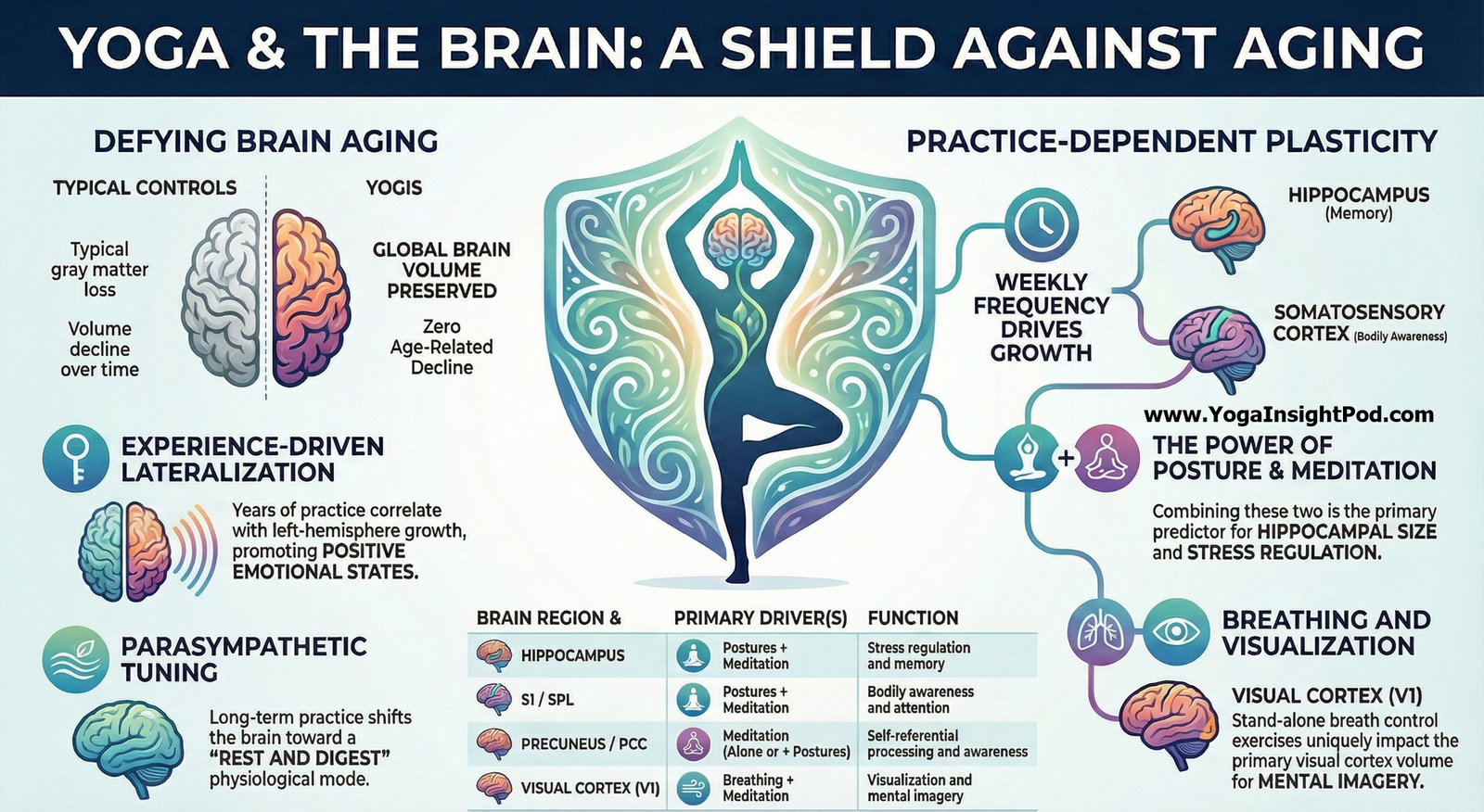
An NIH MRI study reports that experienced yoga practitioners do not show the typical age-related gray-matter decline seen in matched controls and instead have larger insular, hippocampal, and default-mode regions linked to interoception, memory, and emotional regulation. Years of practice and weekly hours, especially combining postures, breathwork, and meditation, track with this brain plasticity, hinting at genuine neuroprotective benefits.
An NIH MRI study reports that experienced yoga practitioners do not show the typical age-related gray-matter decline seen in matched controls and instead have larger insular, hippocampal, and default-mode regions linked to interoception, memory, and emotional regulation. Years of practice and weekly hours, especially combining postures, breathwork, and meditation, track with this brain plasticity, hinting at genuine neuroprotective benefits.