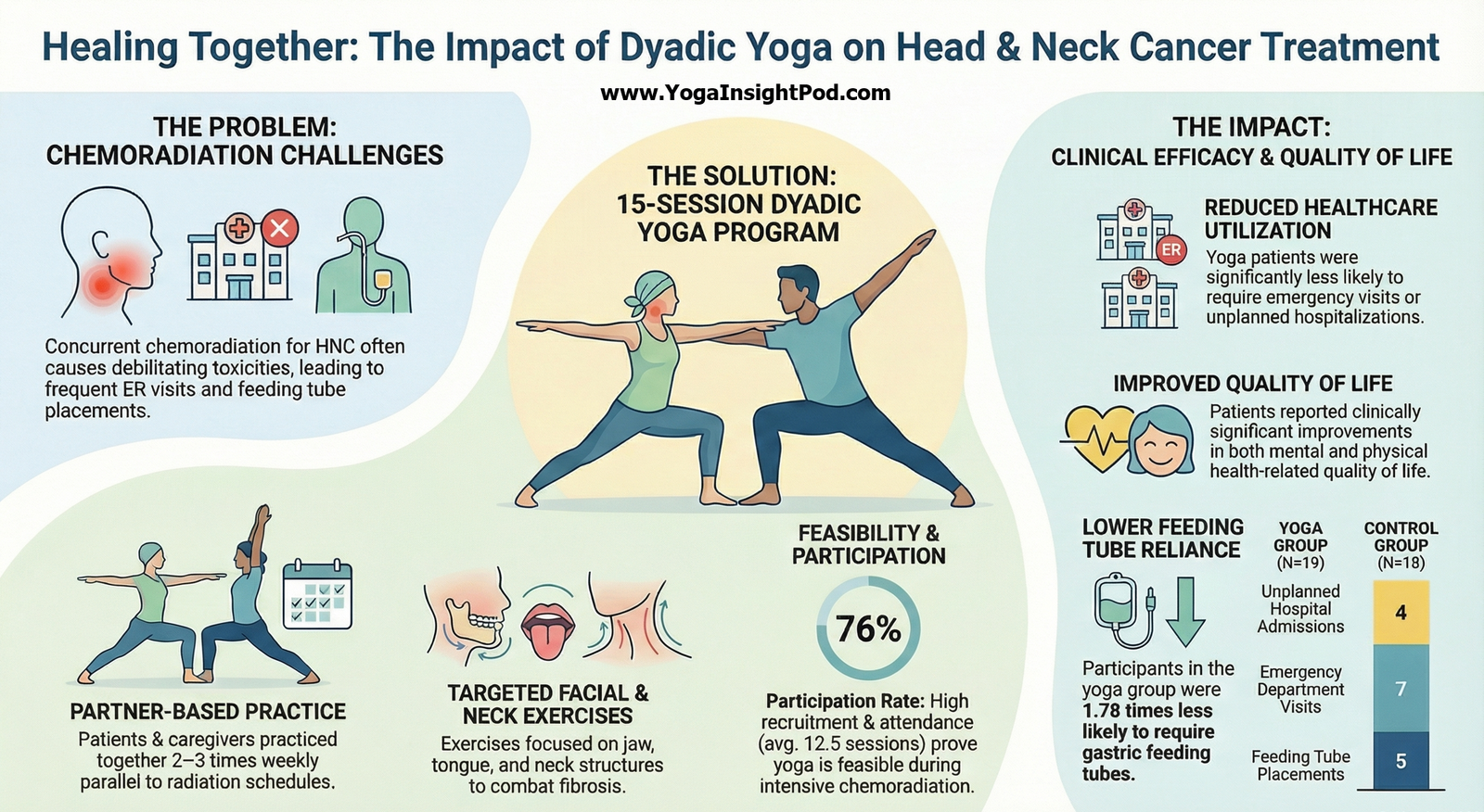
A 2024 pilot RCT at MD Anderson tested a 15-session dyadic yoga program for head and neck cancer patients on chemoradiation and their caregivers, finding high feasibility, better symptom control and quality of life, and fewer unplanned hospital encounters versus usual care. Larger trials are now needed to confirm these promising supportive care benefits.
A 2024 pilot randomized controlled trial from MD Anderson Cancer Center tested a 15-session dyadic yoga program for patients with head and neck cancer (HNC) undergoing concurrent chemoradiation and their family caregivers. The intervention combined gentle, targeted yoga-based exercises for the face and neck, full-body postures, breathing practices, relaxation, and an explicit focus on mutual support, with both patient and caregiver attending all sessions together.
Feasibility was strong: 76 percent of eligible dyads consented, yoga participants completed an average of 12.5 out of 15 sessions, and both patients and caregivers rated the program as beneficial. Clinically meaningful signals of benefit emerged despite the small sample (37 dyads): compared with a waitlist control group receiving usual multidisciplinary care, patients in the dyadic yoga arm reported lower head and neck specific symptom severity and interference and better health-related quality of life at the end of treatment and at 30-day follow-up.
Notably, those in the yoga group were also less likely to experience unplanned hospital admissions, emergency department visits, and feeding tube placements over the treatment course and during the subsequent month, suggesting that better symptom control and coping may translate into reduced acute health care utilization. Caregivers, who often struggle with distress, complex home care tasks, and difficult symptom trajectories, participated as full intervention partners; while their home practice was somewhat lower than patients’, the dyadic format appears to enhance adherence and support for patients, and a larger three-arm trial is underway to tease out the added value of caregiver involvement.
Although preliminary and limited by sample size and lack of an active control, this study positions dyadic yoga as a promising, low-risk behavioral supportive care strategy to help HNC patients and families navigate the intense chemoradiation period.